

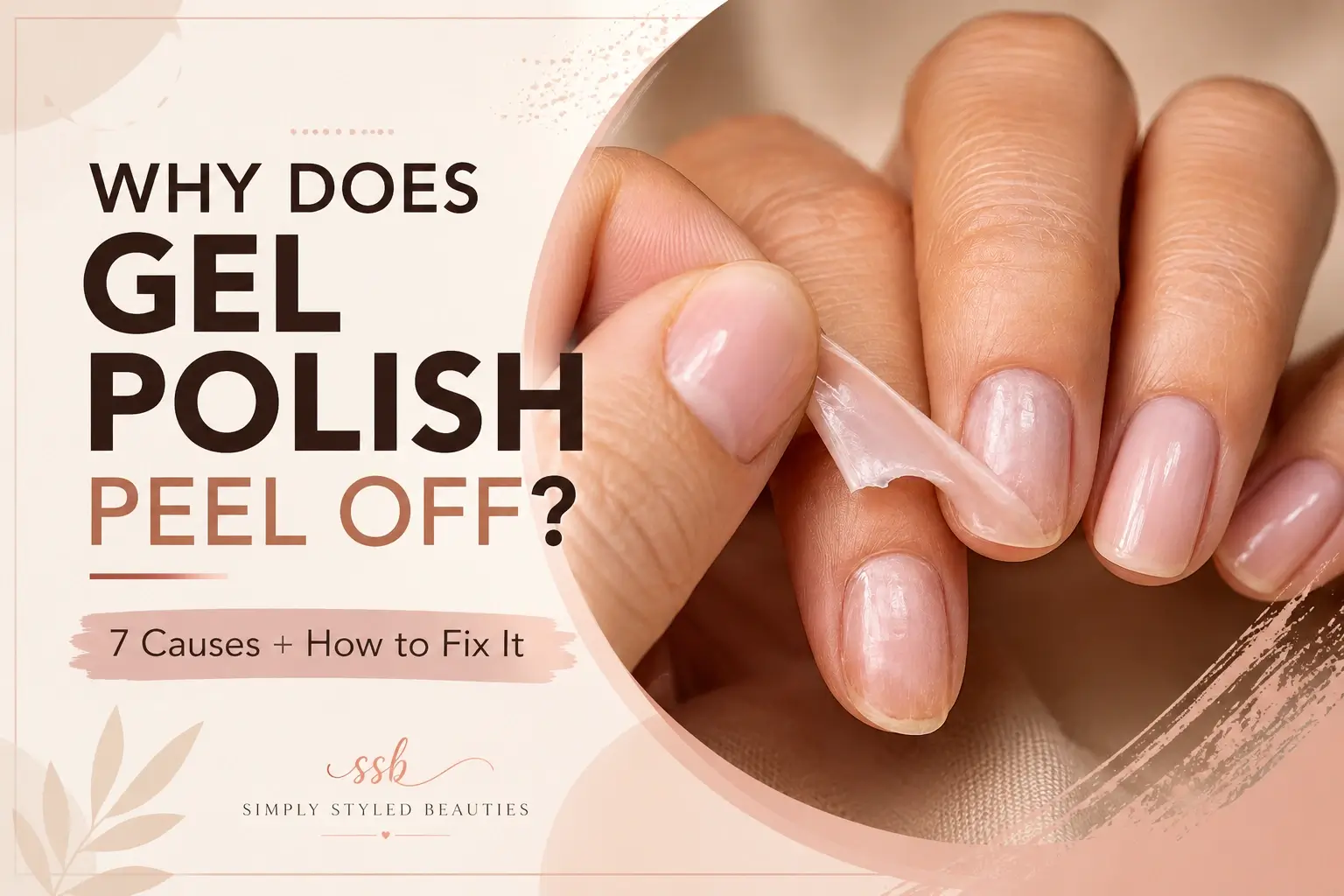
Quick Answer: Gel polish usually peels off in one piece when the manicure has not bonded properly to the natural nail. Common causes include incomplete nail preparation, oil or moisture on the nail plate, gel touching the skin, coats that are too thick, incorrect curing, product/lamp incompatibility, and early lifting caused by wear or picking. Fixing the preparation and application process can significantly improve gel adhesion.
If your gel polish suddenly lifts from the nail like a tiny sticker, you’re definitely not alone.
Sometimes it happens after a day or two. Sometimes the manicure looks perfect for a week, and then one nail starts lifting. And sometimes the entire gel layer comes off in one satisfying-but slightly alarming-piece.
The good news is that gel polish peeling off in one piece usually gives you a clue. Instead of simply replacing the manicure, you can look at where and how it lifted to identify what went wrong.
This guide breaks down the 7 most common reasons gel polish peels off, what each problem looks like, and what you can change before your next manicure.
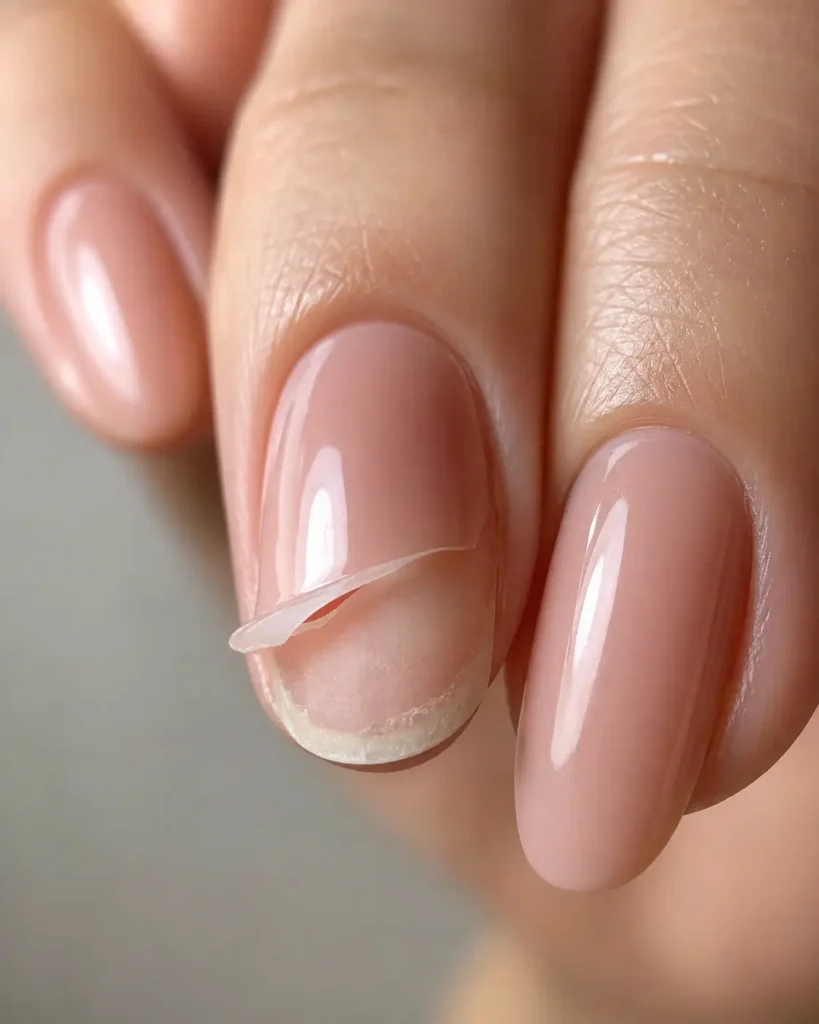
Why Does My Gel Polish Peel Off in One Piece?
When gel polish comes off as one intact layer, the main issue is usually adhesion between the gel system and the natural nail plate.
The most common causes are:
- The nail wasn’t properly prepared.
- Oil, moisture, or residue remained on the nail.
- Gel polish touched the cuticle or surrounding skin.
- The layers were applied too thickly.
- The product wasn’t cured according to its instructions.
- The gel and lamp weren’t a suitable combination.
- The manicure started lifting and was picked or stressed before removal.
Quick Troubleshooting Guide
| What you’re noticing | Possible cause | What to check |
|---|---|---|
| Whole layer lifts like a sticker | Poor adhesion | Nail preparation |
| Peeling starts around cuticle | Product touching skin or incomplete prep | Cuticle area |
| Tips lift first | Free-edge wear or application issue | Nail tips |
| Gel feels soft or wrinkles | Possible curing issue | Product + lamp instructions |
| Peeling happens after 1–2 days | Adhesion/application problem | Prep and application |
| Only one or two nails peel | Individual nail differences or mechanical wear | Nail shape, use, and prep |
| Natural nail looks thin after removal | Picking or forceful removal | Removal technique |
Let’s look at each cause more closely.
1. Your Natural Nail Wasn’t Properly Prepared
One of the biggest reasons gel polish doesn’t stay attached is inadequate nail preparation.
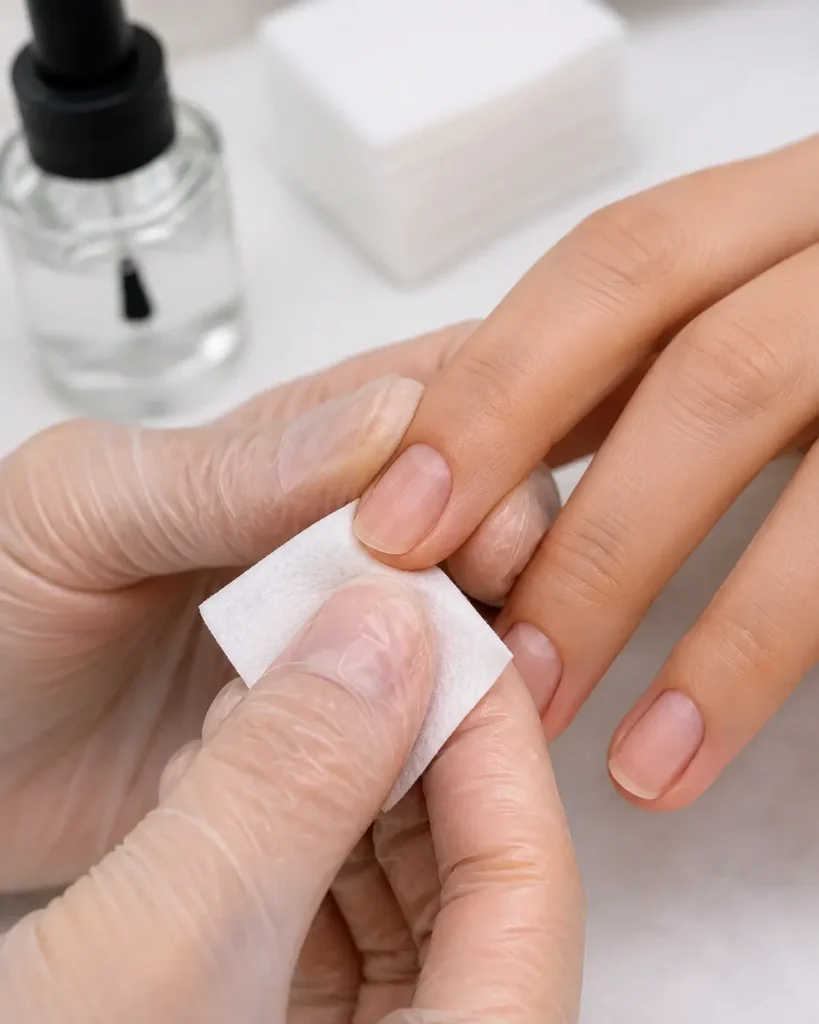
Before gel is applied, the nail plate needs to be clean and appropriately prepared according to the product system you’re using. If there is residue, excess oil, moisture, or loose surface material, the base layer may struggle to form a reliable bond.
This is especially important if you’ve just washed your hands, applied hand cream, or used cuticle oil.
How to fix it
Before applying gel:
- Shape the nails first.
- Gently push back the cuticles if appropriate for your manicure routine.
- Remove loose cuticle material from the nail plate.
- Lightly prepare the surface according to your gel system’s instructions.
- Clean the nail using the cleanser, dehydrator, or prep product recommended by the manufacturer.
- Avoid touching the prepared nail plate with your fingers afterward.
Important: Don’t aggressively buff the natural nail just to make the gel stick. Excessive filing can thin and weaken the nail plate.
2. Oil or Moisture Was Left on the Nail
Even when a nail looks clean, invisible residue can interfere with adhesion.
Hand lotion, cuticle oil, natural oils, water, or leftover cleansing products can affect how the base coat sits on the nail.
This is one reason a manicure may look perfect immediately after application but begin lifting surprisingly quickly.
How to fix it
Keep the nail plate clean and dry immediately before application.
Follow the preparation instructions for your specific gel system rather than automatically adding extra products.
And once the nail has been prepared, don’t touch the surface.
Even a quick fingertip touch can transfer oil back onto the nail.
3. Gel Polish Touched Your Cuticle or Skin
This is a very common application mistake.
Gel should sit neatly on the nail rather than flooding into the cuticle area or surrounding skin.
When product touches the skin, it can create an early lifting point. Once that area starts separating, everyday movement can make the lifting spread.
What to do instead
Leave a small, controlled gap around the cuticle rather than trying to push the gel right against the skin.
If gel accidentally touches the surrounding skin:
Clean it up before curing.
Don’t simply cure it and assume it will stay in place.
This is also important from a safety perspective because repeated skin exposure to uncured gel products should be avoided.
4. Your Gel Coats Were Too Thick
More product doesn’t necessarily mean a stronger manicure.
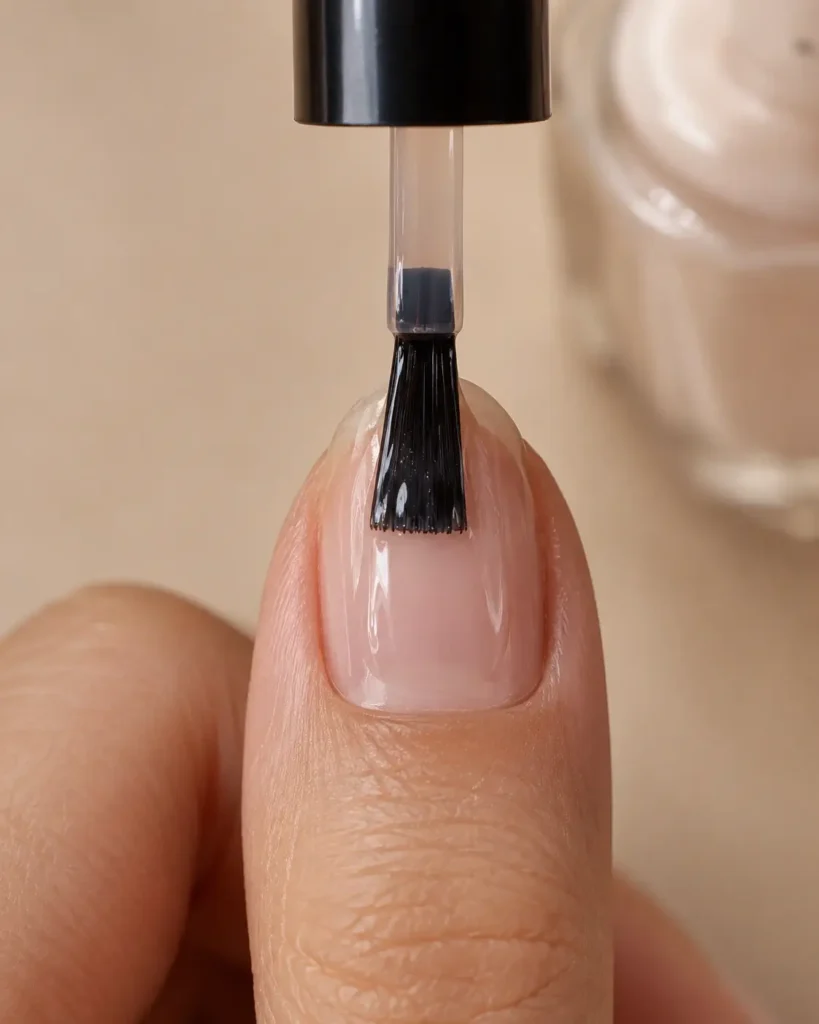
Thick gel layers can create curing problems and may leave the manicure less stable than several properly applied thin layers.
You may also notice:
- Wrinkling
- Bulging
- Uneven surfaces
- Softness underneath
- Peeling soon after application
How to fix it
Apply thin, controlled layers.
Rather than trying to achieve full opacity in one heavy coat, follow the product’s recommended application method and build coverage gradually when necessary.
Keep the product away from the skin and make sure each layer is cured according to the manufacturer’s instructions.
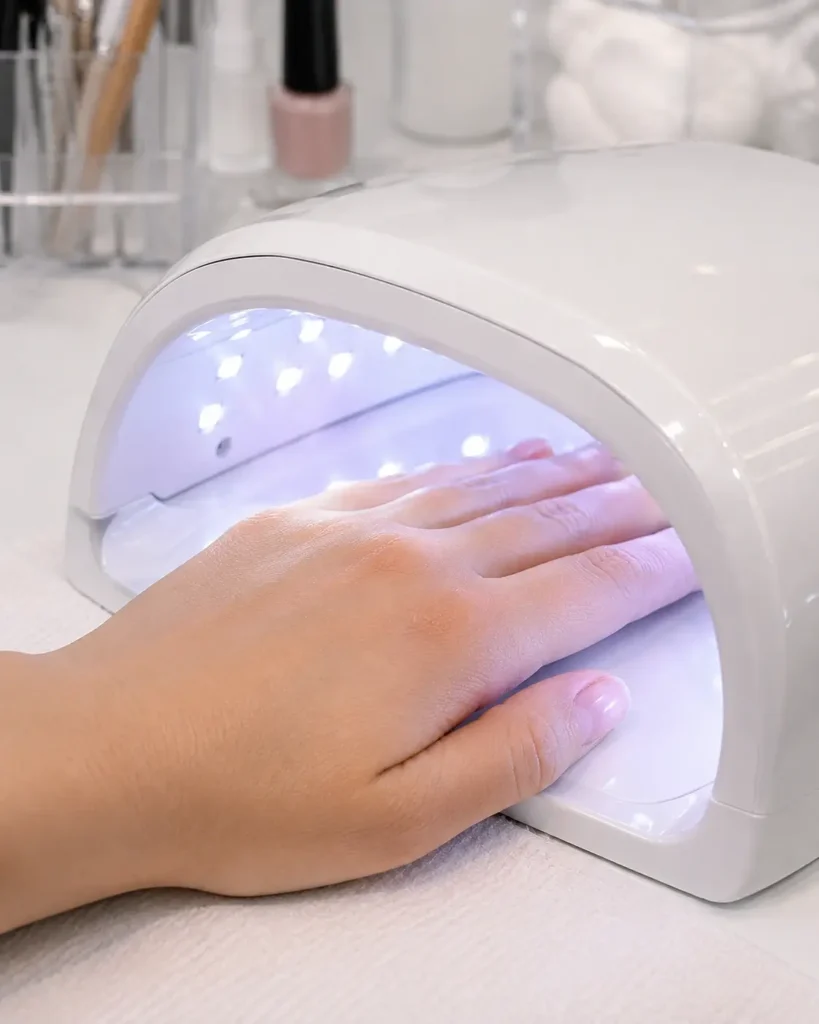
5. The Gel Wasn’t Properly Cured
A manicure can look hard on the surface while still having a curing problem underneath.
Different gel products are formulated differently, so curing requirements can vary.
The correct cure depends on factors such as:
- The gel formula
- The lamp type
- Lamp compatibility
- Recommended exposure time
- Product thickness
- Whether the lamp is functioning correctly
The biggest mistake?
Assuming every gel can be cured by every lamp for the same amount of time.
That’s not a safe assumption.
How to fix it
Use the lamp recommended or specified for your gel system whenever possible.
Follow the manufacturer’s stated curing time and instructions rather than adding arbitrary extra curing time.
If your gel repeatedly feels unusually soft, wrinkles, stays tacky beyond its expected finish, or lifts much earlier than expected, check whether the product and lamp are actually compatible.
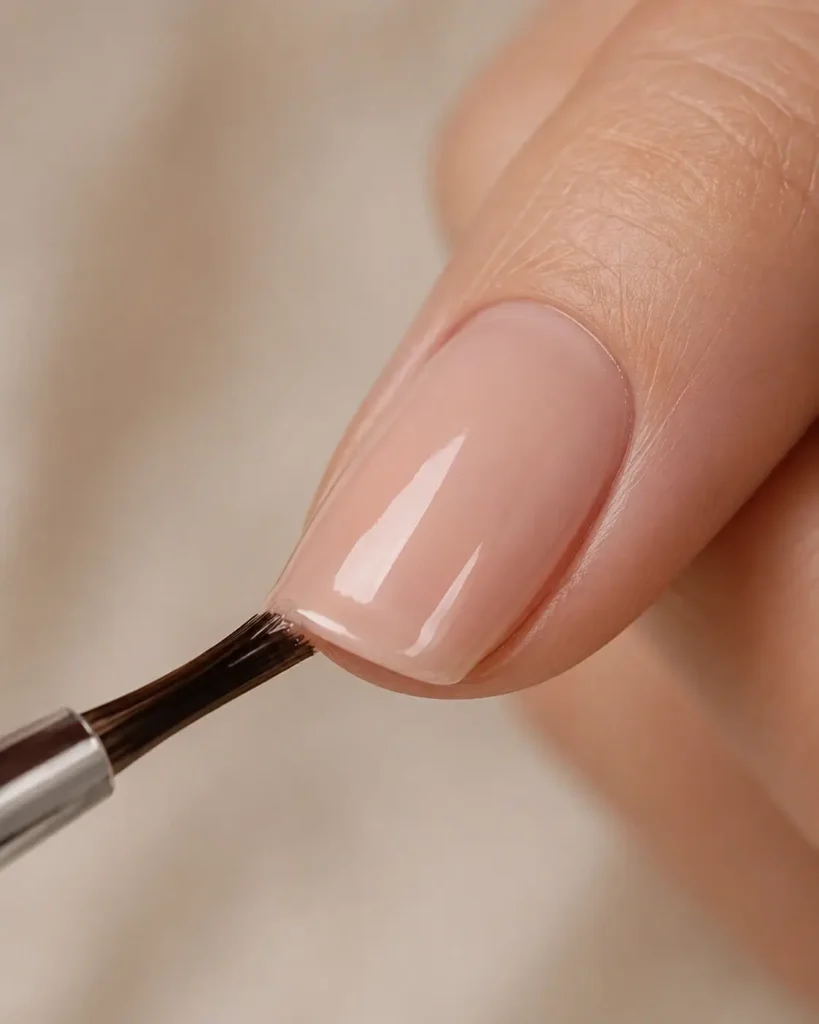
6. Your Gel and Lamp May Not Be Compatible
This is related to curing, but it’s important enough to separate.
A common DIY mistake is buying a gel polish from one brand and pairing it with a random lamp simply because the lamp appears powerful.
But lamp wattage alone doesn’t tell you whether a product will cure correctly.
Different gel systems can have different photoinitiators, curing requirements, and wavelength needs.
Better approach
When possible, use the lamp recommended by the gel manufacturer.
If you’re mixing products from different brands, check their compatibility and curing requirements rather than assuming they will work together.
This is particularly important when you’re troubleshooting repeated peeling.
7. The Manicure Started Lifting-and You Picked It
Sometimes the original application isn’t the only problem.
A manicure can begin lifting because of normal wear, nail growth, mechanical stress, or an application issue.
Then comes the temptation:
“It’s already loose, so I’ll just peel it off.”
That’s where things can get worse.
When you pull or peel attached gel from the natural nail, you can remove superficial layers of the nail plate along with it.
Instead of peeling it:
If the gel has started lifting significantly, remove it using the removal method recommended for that particular product.
Don’t forcefully pull the attached product from the natural nail.
And if the natural nail underneath is painful, very thin, severely damaged, discolored, or otherwise concerning, give it a break from further product application and consider getting professional advice.
Safely removing your polish is only half the battle. Once your nails are bare and prepped again, check out our guide on how to make gel polish last longer for your next manicure.
Why Does Gel Polish Peel Off After 1 or 2 Days?
If your gel manicure starts peeling within a day or two, don’t immediately assume the polish itself is bad.
Early peeling often points toward an issue with:
- Nail preparation
- Oil or moisture contamination
- Product touching the skin
- Thick application
- Curing
- Product/lamp compatibility
Think about where the peeling started.
If it began around the cuticle, inspect your cuticle application.
If the entire layer lifted, look closely at your preparation and adhesion process.
If only the tips started separating, check your free-edge application and daily mechanical wear.
Why Do My Gel Nails Peel Off After a Week?
A manicure that survives several days before lifting can have a different cause from one that fails immediately.
After a week, consider:
- Nail growth
- Repeated water exposure
- Household cleaning
- Frequent typing or physical work
- Picking at a tiny lifted area
- Weak adhesion on a particular nail
- Product compatibility
- Application technique
Not every nail behaves exactly the same way.
If one nail repeatedly fails while the others stay intact, pay special attention to that individual nail rather than automatically changing your entire gel system.
Why Does My Gel Polish Peel Off in One Piece?
When gel polish comes off almost entirely as one sheet, it often means the layer remained relatively intact but didn’t maintain a strong bond with the nail plate.
The most useful things to investigate are:
- Was the nail properly prepared?
- Was oil or moisture present?
- Was the correct prep product used?
- Did gel touch the surrounding skin?
- Were the coats too thick?
- Was the product cured according to its instructions?
- Was the lamp suitable for the product?
Finding the first point of failure is usually more useful than simply applying another coat over the problem.
Can You Fix a Peeling Gel Nail?
It depends on how much the gel has lifted.
If only a tiny area has started lifting
Don’t glue the lifted gel back down or paint over a gap.
Instead, assess whether the product should be safely removed and reapplied according to the product’s instructions.
If most of the gel has lifted
It’s generally better to remove the product properly rather than repeatedly catching and pulling at the loose edge.
If the natural nail is damaged
Don’t immediately cover a cracked or damaged nail with another gel manicure.
Give the nail time to recover and avoid aggressive filing or picking.
Is It Bad to Peel Off Gel Polish?
Yes, forcefully peeling or pulling off gel can damage the natural nail.
The concern isn’t simply the gel layer itself. The problem is that attached portions of the natural nail plate can come away with the product.
Afterward, nails may feel:
- Thin
- Rough
- Flexible
- Sensitive
- More prone to splitting
That’s why a manicure that has started lifting shouldn’t become a DIY peeling session.
How Can I Stop Gel Nails From Peeling?
Before your next manicure, use this simple checklist:
Before application
- Start with clean, properly prepared nails
- Remove residue according to your product system
- Avoid hand cream and cuticle oil on the nail plate immediately beforehand
- Don’t touch the prepared nail surface
If your gel system calls for a dehydrator or prep solution, here’s an option to consider →
During application
- Apply controlled, thin layers
- Keep gel off the surrounding skin
- Follow the manufacturer’s curing instructions
- Use a compatible lamp
- Apply the product to the free edge as appropriate for the system
After application
- Avoid picking at early lifting
- Protect your nails during harsh cleaning or repetitive work
- Don’t forcefully peel product away
- Remove and replace the manicure according to the product’s recommended schedule
How Long Should Gel Polish Last Before Peeling?
There isn’t one exact number of days that applies to every person or every gel system.
Wear time depends on:
- Nail preparation
- Product formulation
- Application technique
- Curing
- Nail growth
- Lifestyle
- Water and chemical exposure
- Mechanical stress
A manicure that starts peeling unusually early deserves troubleshooting rather than simply being reapplied repeatedly.
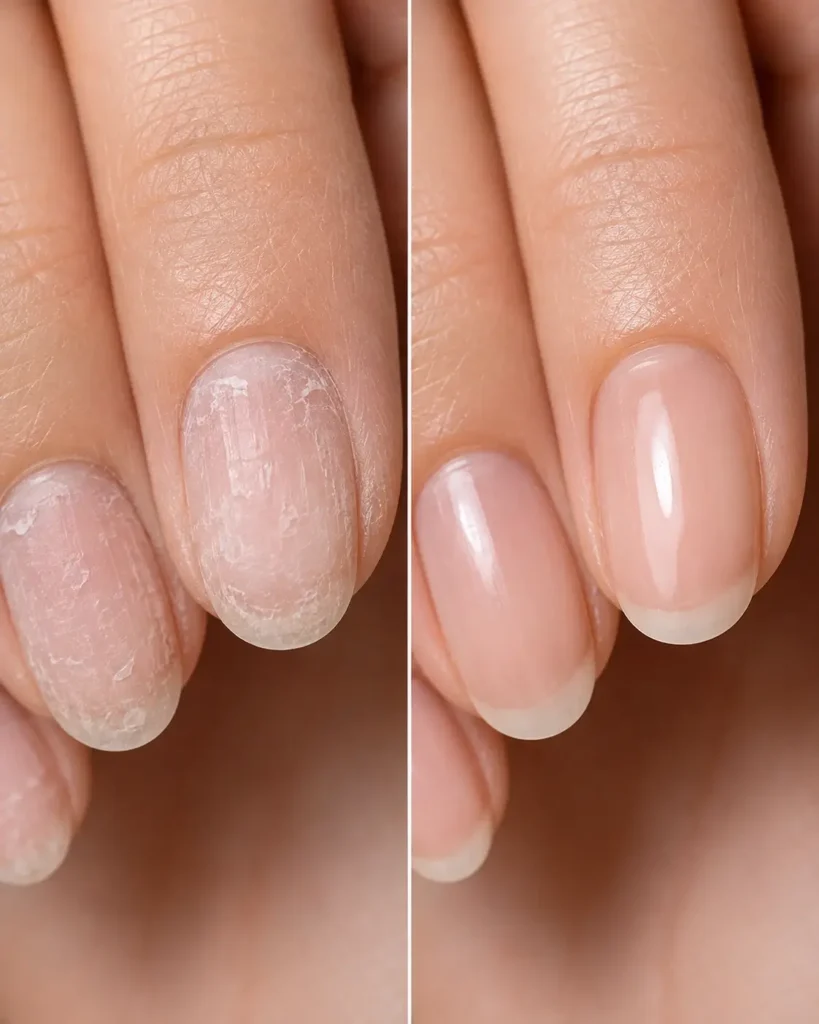
Is Peeling Gel Polish a Sign of Damaged Nails?
Not necessarily.
Peeling can happen because of application or adhesion problems even when the natural nail is healthy.
However, if your natural nails repeatedly become thin, painful, brittle, or visibly damaged after gel removal, don’t keep covering the problem with another manicure.
Reduce aggressive filing and picking, and consider taking a break from enhancements.
When Should You Stop Doing Gel Nails?
Consider pausing gel manicures if you notice:
- Persistent nail pain
- Significant thinning
- Splitting or severe brittleness
- Persistent discoloration
- Swelling or irritation around the nail
- Repeated skin reactions
- Damage that doesn’t improve
If you develop a concerning skin or nail reaction, especially after repeated exposure to gel products, it’s better to stop using the suspected product and seek appropriate professional medical advice rather than trying to cover the reaction with another manicure.
To stop peeling from happening in future sessions, always follow a proper prep routine by learning How to Make Gel Polish Last Longer: 10 Mistakes That Cause Early Peeling. And if the peeling has already ruined your look, make sure you know safely How to remove gel polish at home.
Frequently Asked Questions
Why does my gel polish peel off in one piece?
Gel polish can peel off in one piece when adhesion between the product and natural nail is poor. Common contributors include inadequate preparation, oil or moisture on the nail, product touching the skin, overly thick application, curing problems, or an incompatible lamp/product combination.
How can I fix peeling gel nail polish?
If gel has started lifting, don’t peel or glue the loose section back down. Assess the extent of lifting and remove the product using the method recommended for that gel system. Correct the preparation, application, and curing process before reapplying.
Why does my gel polish peel off after 2 days?
Peeling after only a couple of days often points to an adhesion or application problem. Check nail preparation, oil or moisture contamination, gel touching the skin, coat thickness, curing instructions, and lamp/product compatibility.
Why do my gel nails peel off after a week?
After a week, consider both application and everyday wear. Nail growth, water exposure, physical activity, cleaning chemicals, mechanical stress, or picking at early lifting can all contribute to premature peeling.
Is it bad to peel off gel polish?
Forcefully peeling gel polish can remove layers of the natural nail plate and leave nails thin or rough. Instead of pulling attached product away, use the removal method recommended for that particular gel system.
How do I stop my gel nails from peeling?
Focus on proper nail preparation, keeping the nail plate free from residue, preventing gel from touching the surrounding skin, applying controlled layers, using a compatible lamp, and following the manufacturer’s curing instructions.
Is peeling gel polish normal?
Minor lifting can occur as a manicure ages and the natural nail grows, but peeling very soon after application is a reason to troubleshoot the preparation, application, curing, and product system.
Can peeling nails be repaired?
Natural nails can improve as they grow out when the source of damage is removed. Avoid aggressive filing and picking, keep the nails protected, and seek professional advice if damage is persistent, painful, or worsening.
Final Takeaway
If your gel polish keeps peeling off in one piece, don’t just switch colors and hope for the best.
Start with the basics: prepare the nail correctly, keep oil and moisture off the nail plate, prevent gel from touching the skin, use controlled layers, and make sure your gel and lamp are compatible.
Then pay attention to when and where the peeling starts.
That small detail can tell you whether you’re dealing with an adhesion problem, a curing issue, an application error, or simply wear and tear.
And most importantly, don’t turn a lifting manicure into a peeling contest. Protecting the natural nail underneath is always more important than keeping one manicure on for a few extra days.