

Quick Answer: The safest at-home way to remove regular soak-off gel polish is to soften it with acetone rather than peeling, scraping, or aggressively filing it away. Protect the surrounding skin, lightly roughen the gel surface, place acetone-soaked cotton over each nail, wrap the fingertips, and wait until the gel softens enough to wipe away gently. If the gel does not soften, stop rather than forcing it.
If you’re staring at a grown-out gel manicure and thinking, “There has to be a faster way to get this off,” you’re not alone.
The tempting options-peeling it off, scraping it with a metal tool, or filing all the way down-can make removal seem faster, but they can also remove layers of the natural nail.
The good news is that you can remove regular gel polish at home without destroying your nails. The key is to let the gel soften first, then remove only what releases easily.
This guide explains exactly how to do it, what to do when gel refuses to budge, whether you can remove gel without acetone, and when DIY removal is better left to a professional.
What You Need to Remove Gel Polish at Home
Before you start, gather everything so you don’t have to stop halfway through.
You’ll need:
- 100% acetone
- Cotton balls or cotton strips
- Plastic food wrap or nail-removal clips
- Nail file or buffer
- Petroleum jelly
- Wooden orange stick or non-metal cuticle pusher
- Warm, damp washcloth
- Gentle soap
- Towel
- Cuticle oil or a rich hand moisturizer
A dermatology-backed removal method recommends petroleum jelly around the cuticles, acetone-soaked cotton, and a tight plastic wrap seal.
Important: This guide is for regular soak-off gel polish. Hard gel, builder gel, and some extensions may not soak off the same way and may require professional removal.
If you’re switching to press-ons while you wait for your nails to recover, make sure you’re using the right glue for press-on nails, so you’re not tempted to pick or peel them off later.
How to Remove Gel Polish at Home Step by Step
Step 1: Protect the Skin Around Your Nails
Start with clean, dry hands.
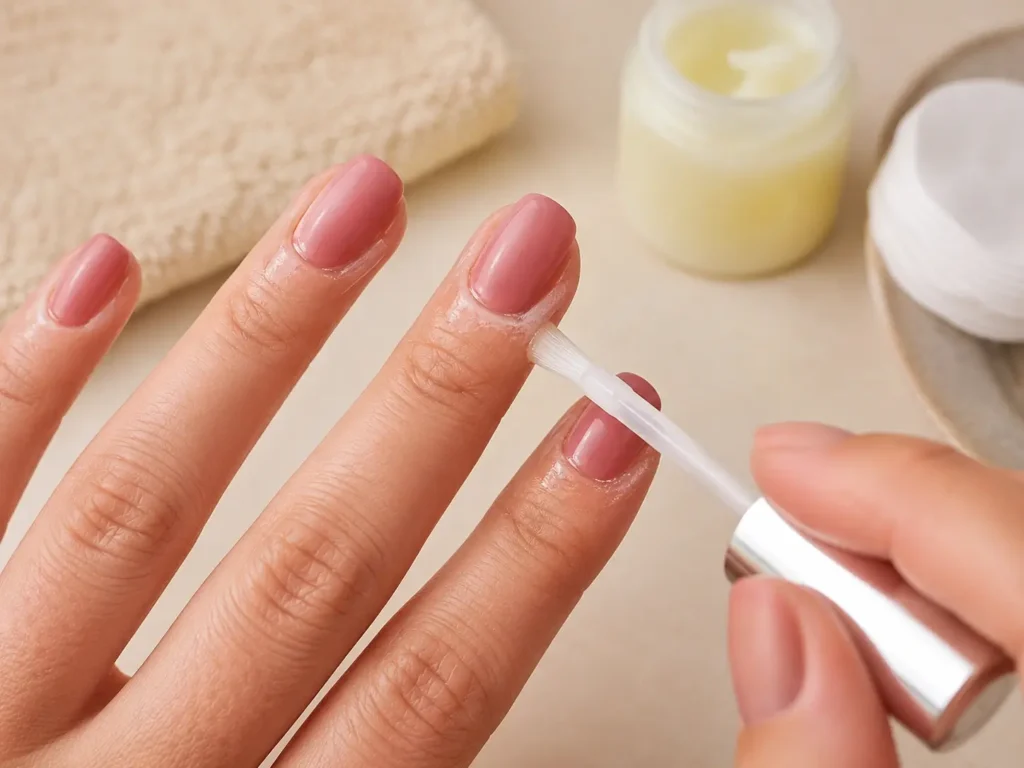
Apply a thin layer of petroleum jelly around each nail, especially over the cuticle and surrounding skin.
Try to keep the petroleum jelly on the skin rather than the nail plate, because an oily nail surface can interfere with the removal process.
Why bother with this step?
Acetone can dry and irritate surrounding skin, so creating a barrier helps limit unnecessary exposure. The American Academy of Dermatology specifically recommends petroleum jelly around the cuticles before gel removal.
Step 2: Lightly Roughen the Gel’s Shiny Surface
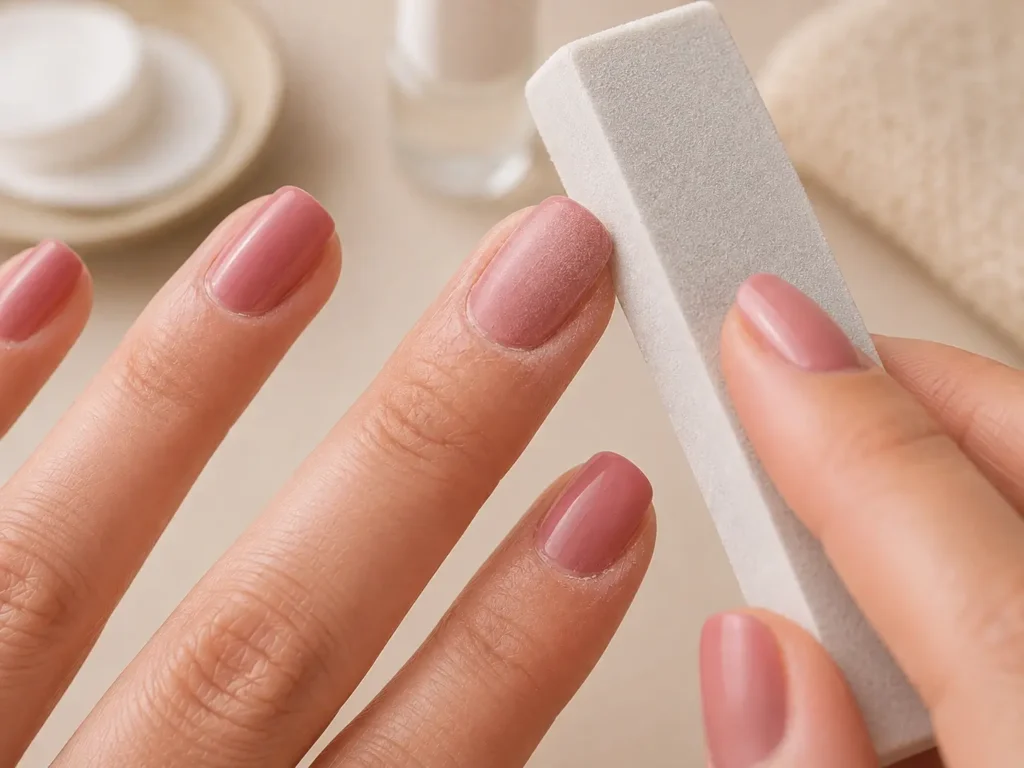
Take a nail file or buffer and gently remove the glossy surface of the gel.
You don’t need to file the entire manicure off.
The goal is simply to break through the shiny top layer so the acetone can work more effectively on the gel underneath.
Don’t do this:
- Don’t aggressively file down to your natural nail.
- Don’t keep filing once the shiny layer has been removed.
- Don’t try to make the natural nail completely bare with the file.
This distinction matters because excessive filing can thin or weaken the nail plate. Dermatologists caution against filing gel polish off completely because mechanical removal can damage the natural nail.
Step 3: Saturate Cotton With Acetone
Cut small pieces of cotton roughly to the size of each nail.
Soak each piece thoroughly in 100% acetone.
The cotton should be wet enough to keep the gel surrounded by acetone, but it doesn’t need to be dripping.
Using pieces that are close to the size of your nails also helps reduce unnecessary acetone contact with your surrounding skin.
Step 4: Place the Cotton Over Each Nail
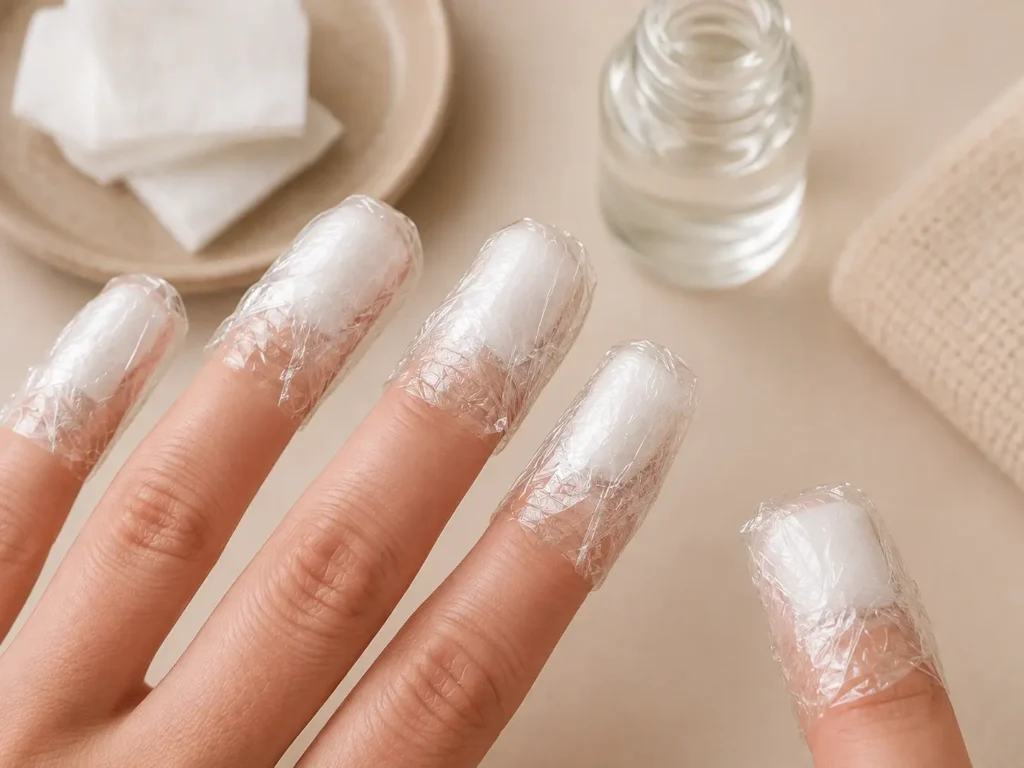
Put one acetone-soaked cotton piece directly over each nail.
Then wrap each fingertip securely with plastic food wrap.
You want enough pressure to keep the cotton against the nail and create a seal, but never wrap so tightly that it restricts circulation.
The American Academy of Dermatology recommends plastic food wrap as an alternative to foil because it can create a tighter seal and reduce dripping.
Pro tip
Work on one hand at a time.
It is much easier to unwrap, check, and gently remove the softened gel when you aren’t trying to manage both hands simultaneously.
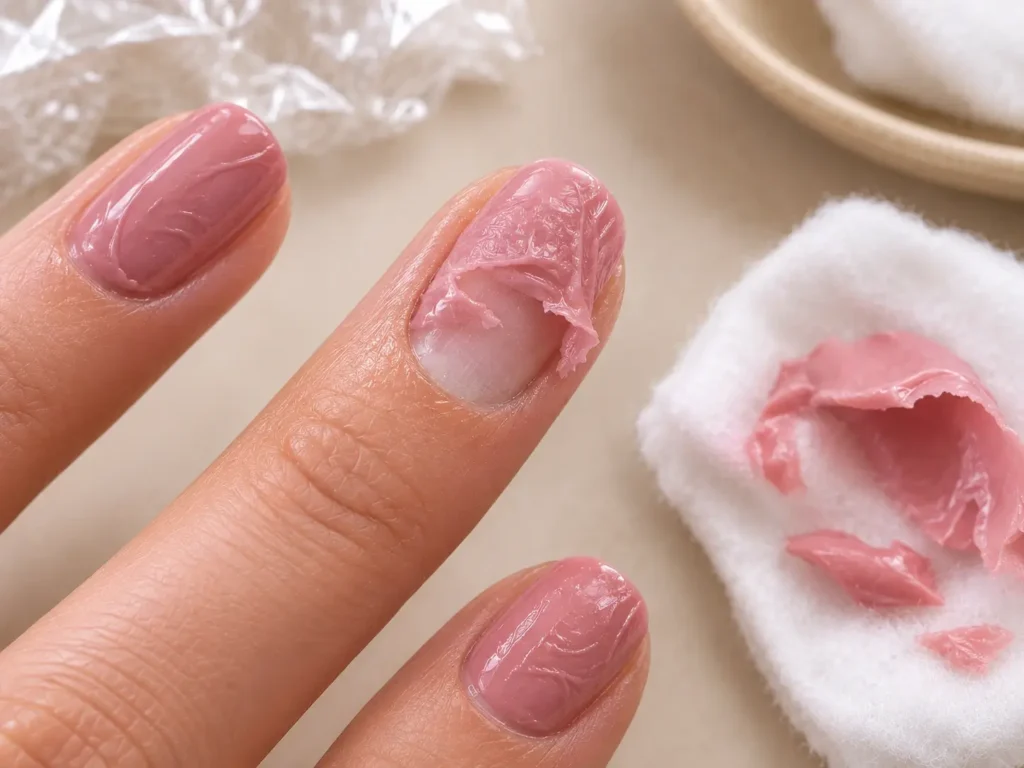
Step 5: Give the Acetone Time to Soften the Gel
Leave the wraps in place for around 10 minutes, then check one nail.
You are looking for gel that appears softened, wrinkled, lifted, or easily movable.
The AAD’s dermatologist-recommended method uses a 10-minute wrap for gel polish removal.
What if it hasn’t softened?
Don’t immediately start scraping.
Rewrap the nail and give it additional time, particularly if you have a thicker manicure.
Different gel systems can behave differently, so the product manufacturer’s removal instructions should take priority when they specify a different process.
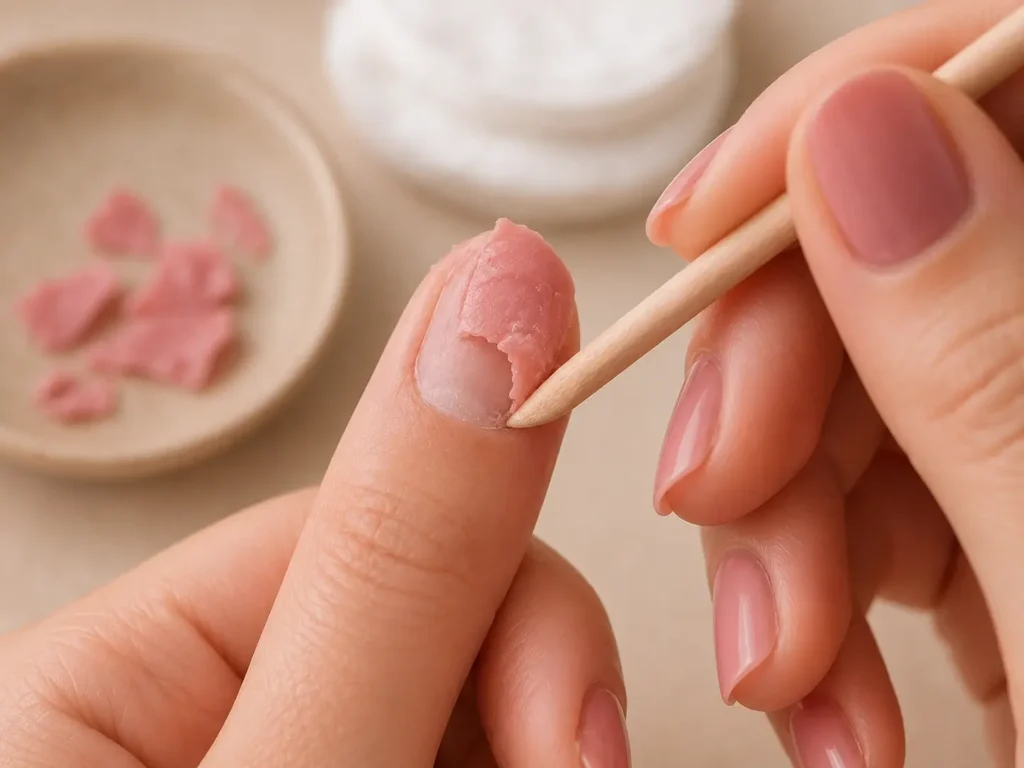
Step 6: Gently Remove the Softened Gel
Once the gel has softened, use a warm, damp washcloth to gently rub away the remaining polish.
For small areas that have already released, you can carefully use a wooden orange stick or another gentle, non-metal tool.
The important word here is gently.
If you have to force the gel away from the nail, it isn’t ready.
The goal isn’t to scrape every last molecule of product off immediately. It’s to remove the softened coating while leaving the natural nail underneath intact.
What If the Gel Polish Won’t Come Off?
This is where many DIY removals go wrong.
If the gel is still firmly attached after the first removal attempt:
- Don’t peel it.
- Don’t dig underneath it.
- Don’t aggressively scrape it.
- Don’t keep filing toward your natural nail.
- Recheck the product’s removal instructions.
- Consider another controlled soak.
- Stop and seek professional removal if the product appears resistant to soaking.
Some products are not designed to soak off easily.
Hard gel and certain builder-gel systems are different from regular soak-off gel polish. Trying to treat every type of gel as if it were ordinary gel polish can lead to unnecessary filing and nail damage.
Can You Remove Gel Polish Without Acetone?
Not reliably in the same way.
This is one of the biggest misconceptions surrounding at-home gel removal.
Regular nail polish can often be removed with different solvents, but cured gel polish is designed to be much more durable. Warm water, dish soap, rubbing alcohol, oils, or other household hacks should not be presented as equivalent substitutes for acetone when the goal is to dissolve regular soak-off gel polish.
If you don’t want to use acetone, the safer choices are to:
- Let the gel grow out rather than picking it off.
- Have it professionally removed.
- Follow the exact removal system recommended by the gel manufacturer.
The AAD specifically identifies allowing the gel to grow out as a safe alternative and warns against picking or scraping it away.
What about warm water?
Warm water may make your hands feel more comfortable and can soften surrounding skin, but it does not dissolve cured gel polish.
Soaking your fingertips in hot water and expecting the manicure to slide off is not a reliable removal method.
What about rubbing alcohol?
Alcohol can clean or degrease the nail surface, but it shouldn’t be treated as a replacement for acetone for dissolving cured soak-off gel.
What about dish soap?
Dish soap can clean your hands, but it doesn’t provide the same solvent action as acetone.
So if a “no-acetone gel removal hack” requires aggressive scraping afterward, it may simply be replacing one problem with another.
Can You Remove Gel Nails Quickly Without Damaging Them?
The fastest safe method isn’t necessarily the method that removes the gel in the fewest minutes.
A removal that takes 15 minutes but leaves your natural nails intact is a much better result than a five-minute removal that leaves them thin, rough, or peeling.
Avoid the temptation to speed things up by:
- Pulling off lifted gel
- Using your fingernails to pry underneath
- Scraping aggressively
- Filing directly onto the natural nail
- Using sharp metal tools
- Repeatedly buffing the same area
Picking and scraping gel can remove layers of the natural nail plate. The AAD specifically warns that picking or filing off gel polish can significantly damage nails.
Is It Safe to Peel Off Gel Polish If It’s Already Lifting?
No.
Even when a corner is already lifting, that doesn’t mean the rest of the coating is ready to come off.
Pulling the lifted section can take natural nail layers with it.
This is particularly important if your gel manicure has started peeling after only a few days. Instead of treating the lifting as an invitation to peel the entire manicure off, follow proper removal or have it professionally removed.
If your gel polish repeatedly peels off in one piece, your application process may also be part of the problem.
Read our guide on why gel polish peels off in one piece to troubleshoot the causes.
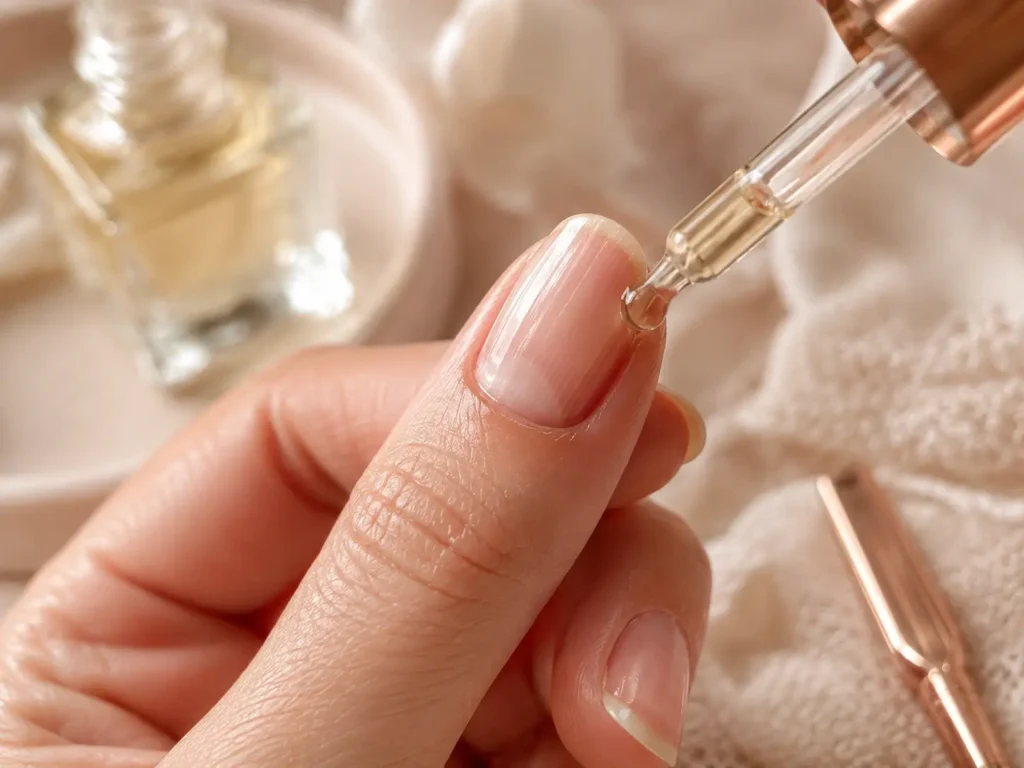
What Happens to Your Nails After Gel Removal?
Your nails may look slightly dry after removal, especially if they have been exposed to acetone.
That doesn’t automatically mean you’ve permanently damaged them.
Start with simple aftercare:
Apply Cuticle Oil
Massage cuticle oil around the nail and surrounding skin.
Moisturize Your Hands
Use a rich hand cream after washing your hands.
Keep Nails at a Manageable Length
If your nails feel weak or thin, keeping them shorter can reduce mechanical stress while they grow.
Give Damaged Nails Time
Nail damage doesn’t disappear overnight. The damaged portion generally has to grow out.
Cleveland Clinic notes that nail cracking, peeling, white spots, grooves, and weakening can occur after gel manicures or improper removal, and that damaged areas can take months to fully grow out.
If your gel polish has ever come off in one clean sheet instead of dissolving properly, that’s usually a sign something went wrong at application: here’s why gel polish peels off in one piece and how to stop it happening next time.
When Should You Stop DIY Gel Removal?
Stop and consider professional removal if:
- The product won’t soften after following its removal instructions.
- You aren’t sure whether you have regular gel, builder gel, or hard gel.
- Your natural nail is painful.
- The nail is visibly separating from the nail bed.
- You see significant thinning or damage.
- The surrounding skin becomes very irritated.
- You feel you need to scrape aggressively to remove the product.
And if you have persistent nail changes, significant pain, swelling, or other concerning symptoms, a dermatologist is a better choice than continuing to experiment with removal techniques.
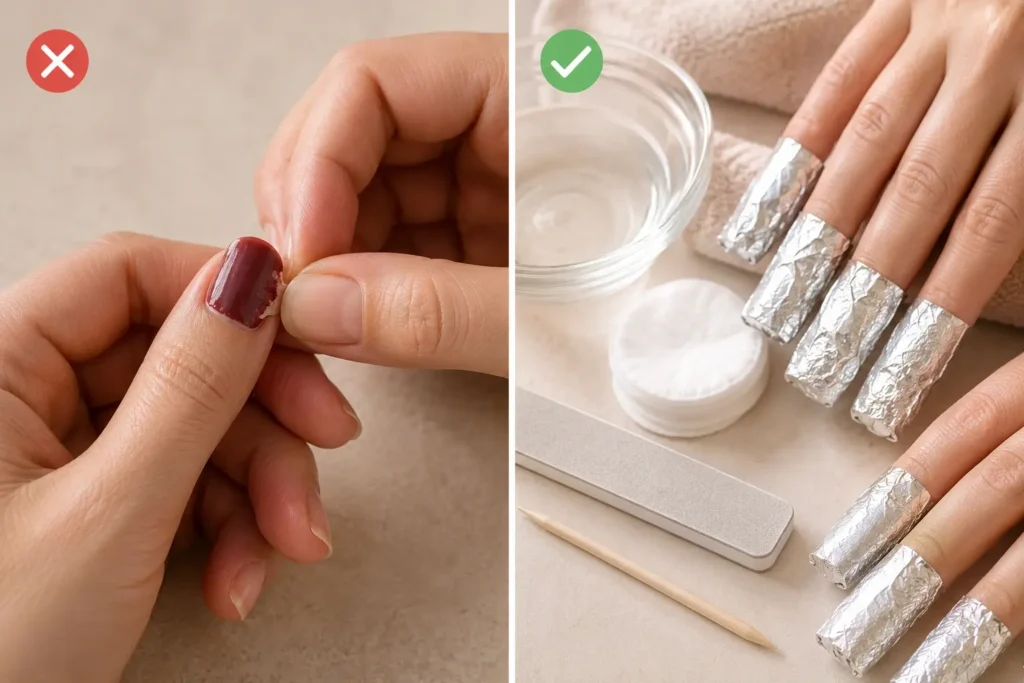
Gel Polish Removal Mistakes to Avoid
Here’s the short version:
| Mistake | Why It’s a Problem | Better Approach |
|---|---|---|
| Peeling the gel off | Can pull away nail layers | Soften it first |
| Filing all the way down | Can thin the natural nail | Only roughen the topcoat |
| Scraping aggressively | Can damage the nail plate | Remove only softened product |
| Using hot water as the main remover | Doesn’t dissolve cured gel | Use the proper removal method |
| Leaving acetone on skin unnecessarily | Can irritate and dry skin | Protect surrounding skin |
| Treating hard gel like regular gel polish | Some systems don’t soak off | Check product instructions/professional removal |
The Bottom Line
If you want to remove gel polish at home quickly without damaging your natural nails, don’t try to outsmart the gel.
Lightly break the shiny top layer, protect the surrounding skin, use the appropriate acetone-soaked removal method, give the product enough time to soften, and only remove what comes away easily.
The biggest mistake is trying to make removal faster by peeling, scraping, or aggressively filing.
And if you’re specifically trying to avoid acetone, don’t replace it with a collection of questionable “hacks.” For regular soak-off gel, professional removal or allowing the manicure to grow out may be safer than forcing an unreliable DIY method.
Frequently Asked Questions
How do you remove gel polish at home?
Lightly roughen the gel’s glossy topcoat, protect the surrounding skin with petroleum jelly, place acetone-soaked cotton over each nail, wrap the fingertips, and allow the gel to soften before gently removing the softened product.
How long does it take to remove gel polish at home?
A dermatologist-recommended method uses an acetone-soaked cotton wrap for about 10 minutes before checking whether the gel has softened. Thicker or different gel systems may require a different removal time, so follow the product’s instructions.
Can I remove gel polish without acetone?
There isn’t a reliable household substitute that dissolves regular cured gel polish in the same way acetone does. If you want to avoid acetone, consider professional removal or letting the gel grow out rather than scraping or peeling it.
Does hot water remove gel polish?
No. Warm water may soften surrounding skin and make the removal process more comfortable, but it does not reliably dissolve cured gel polish.
Is it bad to peel gel polish off?
Yes. Pulling or peeling gel polish can remove layers of the natural nail plate and leave nails thin, rough, or weakened. It’s better to soften the gel and remove it gently.
What if my gel polish won’t come off with acetone?
Don’t force it. Check whether the product is actually a soak-off gel and follow the manufacturer’s removal instructions. Hard gel and some builder-gel systems may require filing or professional removal rather than soaking.
How do I care for my nails after removing gel polish?
Wash your hands gently, moisturize your hands and nails, and apply cuticle oil regularly. If your nails are visibly thin, peeling, or damaged, keep them protected and allow the damaged portion to grow out.
Can I remove gel polish that is already peeling?
Yes, but don’t pull the lifted gel off. Properly soften and remove the manicure instead. If it repeatedly peels after only a few days, troubleshoot the application process rather than repeatedly peeling it away.
A Note Before You Remove Your Gel
Gel manicures can be convenient and long-lasting, but both the manicure and its removal can stress the natural nail. Dermatologists recommend avoiding picking and aggressive filing and taking care during removal.
If you’re unsure what type of enhancement you have, check the product or salon’s removal instructions before starting. Regular soak-off gel polish and hard gel are not interchangeable.