

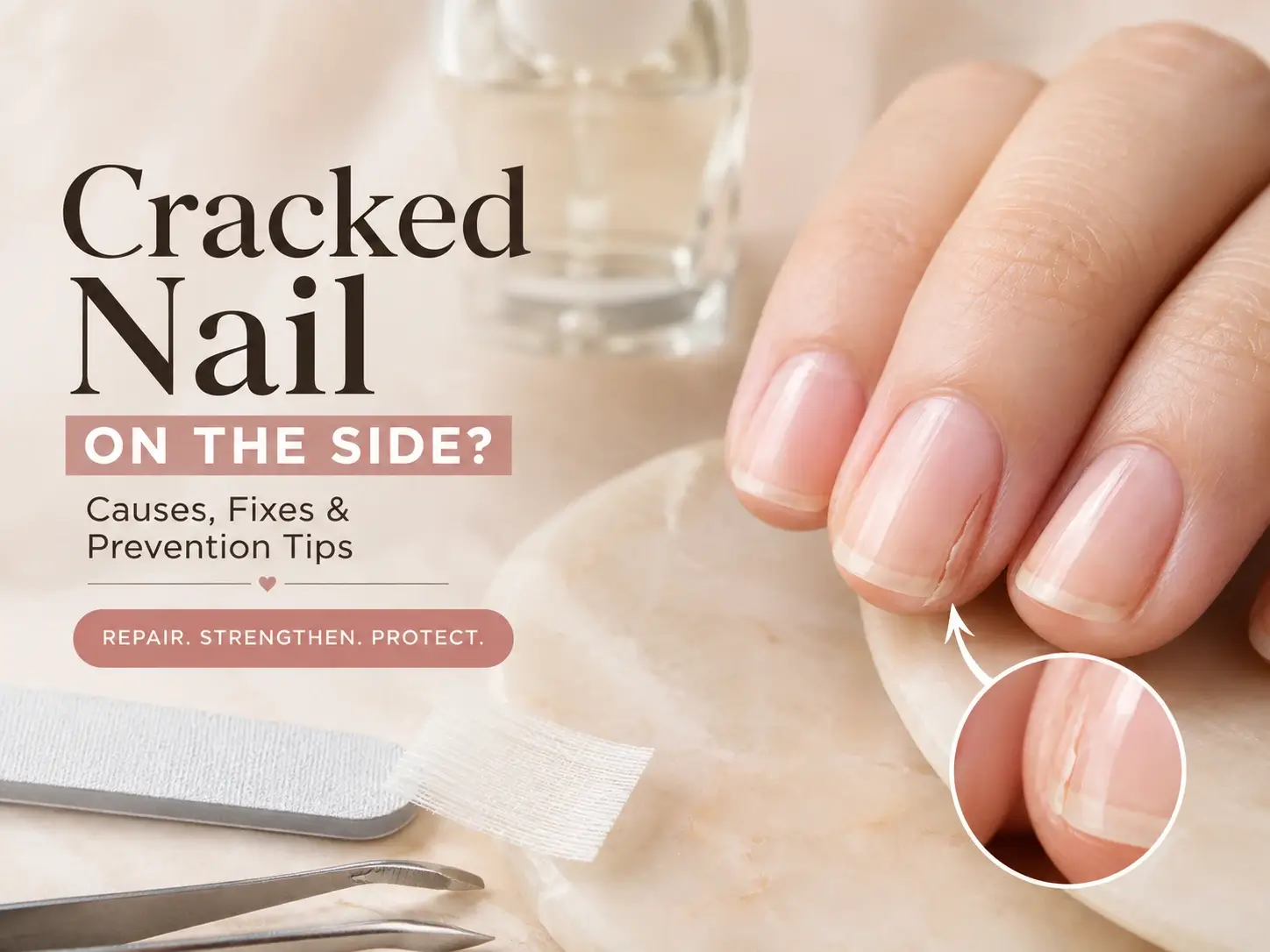
Quick Answer: A small crack on the side of a nail can often be protected temporarily so it does not catch or split farther. For a crack that is only in the nail plate and is not bleeding or attached to an open wound, gently smooth any sharp edge and reinforce the area with a suitable nail-repair wrap or clear nail product. If the crack extends into the attached skin, is bleeding, very painful, or the nail is partly torn away, treat it as an injury rather than a manicure problem and consider professional medical care.
A cracked nail on the side can be much more annoying than a simple break at the tip. The side edge can catch on clothing, hair, towels, or everyday objects, making a small split feel like it is getting worse every time you use your hands.
The good news is that a small side-wall crack that stays within the nail plate can often be protected while the nail grows out.
The important distinction is whether the crack is only in the hard nail plate or whether it has reached the skin underneath or around the nail. This guide focuses on cosmetic nail-plate cracks and explains what you can safely do at home, what commonly causes side splitting, and when a cracked nail should no longer be treated as a DIY manicure issue.
What Is a Cracked Nail on the Side?
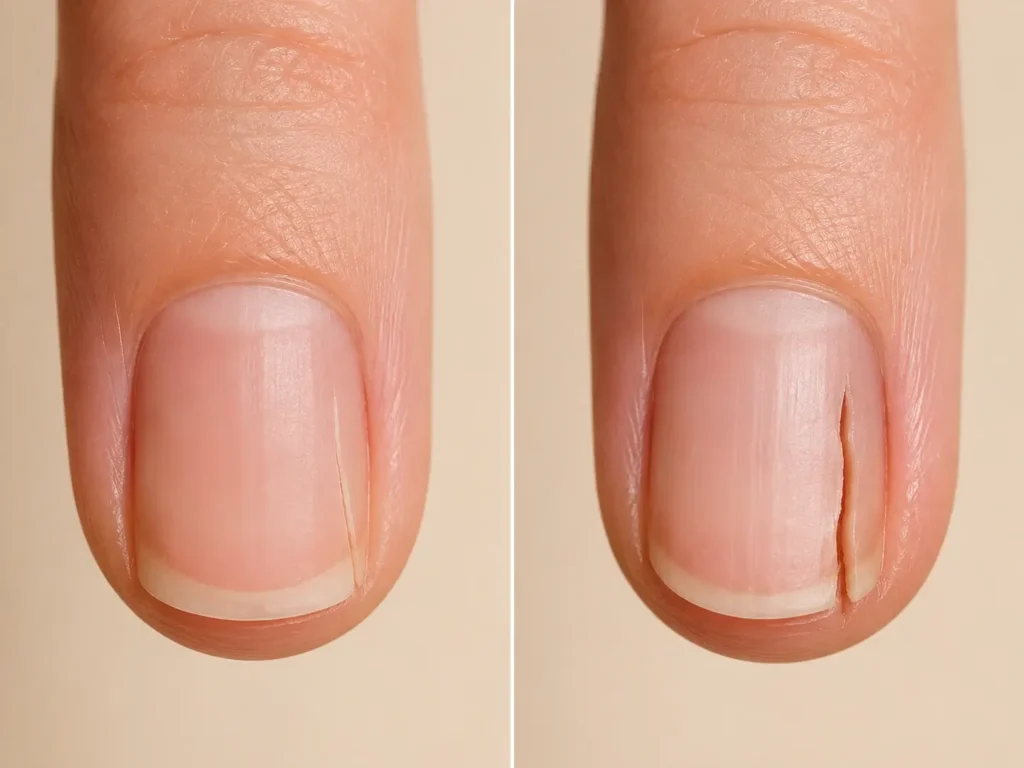
A side nail crack, sometimes called a side-wall or lateral nail crack, is a split that develops along one of the side edges of the nail rather than across the free edge.
Because the side of the nail is exposed to pressure from daily activities, a small split can easily catch on fabric or other surfaces.
There are two situations to distinguish:
1. A crack in the nail plate
The split is limited to the hard nail itself.
It may look rough, jagged, or slightly separated, but there is no open wound or bleeding underneath.
This is generally the type of crack that can be approached as a temporary nail-repair problem.
2. A crack involving the attached skin
The split extends into the skin underneath or around the nail, or the nail has been partially torn away.
This is different from a cosmetic nail crack. Trying to cover an open or bleeding area with ordinary nail products can make the situation worse.
If you see bleeding, significant pain, exposed tissue, major swelling, or a nail that is partly detached, stop treating it like a manicure problem and seek appropriate medical advice.
Can a Cracked Nail on the Side Heal Itself?
A nail plate does not simply fuse back together after it has split.
Instead, the damaged section generally needs to grow forward with the nail before it can eventually be trimmed away.
That is why the goal of a temporary repair is not to magically heal the crack. The goal is to protect and stabilize the damaged section while it grows out.
For a small crack that does not involve the skin, protecting the area can also reduce the chance of the split catching on everyday objects.
Should You Leave a Side Nail Crack Alone?
It depends on the type of crack.
A tiny, smooth crack that is not catching on anything may simply need protection and monitoring.
However, a jagged side crack that repeatedly catches on clothing or hair can become more troublesome.
Instead of pulling or tearing the nail, gently reduce the sharp edge and protect the area.
Never pull off a partially attached piece of nail.
If removing the loose section would expose tender skin or cause bleeding, don’t force it.
How to Fix a Small Cracked Nail on the Side
If the crack is only in the nail plate, you can try a temporary reinforcement method.
If you’re using nail glue or adhesive products, choose products specifically intended for nail use and follow their instructions.
What You’ll Need
Depending on the method you choose:
- A clean nail file
- Nail cleanser or rubbing alcohol suitable for nail preparation
- A small nail-repair silk or fiberglass wrap
- Clear nail adhesive or a suitable clear nail-repair product
- A buffer
- Clean tweezers
- A protective top coat
You don’t need every item for every repair method.
Step 1: Clean the Nail
Remove nail polish and gently clean the nail.
Allow it to dry completely before applying any repair product.
Avoid aggressive scraping around the side wall.
Step 2: Smooth the Sharp Edge
If a small section is sticking out, use a fine nail file to gently smooth the sharpest edge.
Don’t aggressively file across the crack.
The goal is simply to prevent the split from catching.
Step 3: Prepare a Small Repair Patch
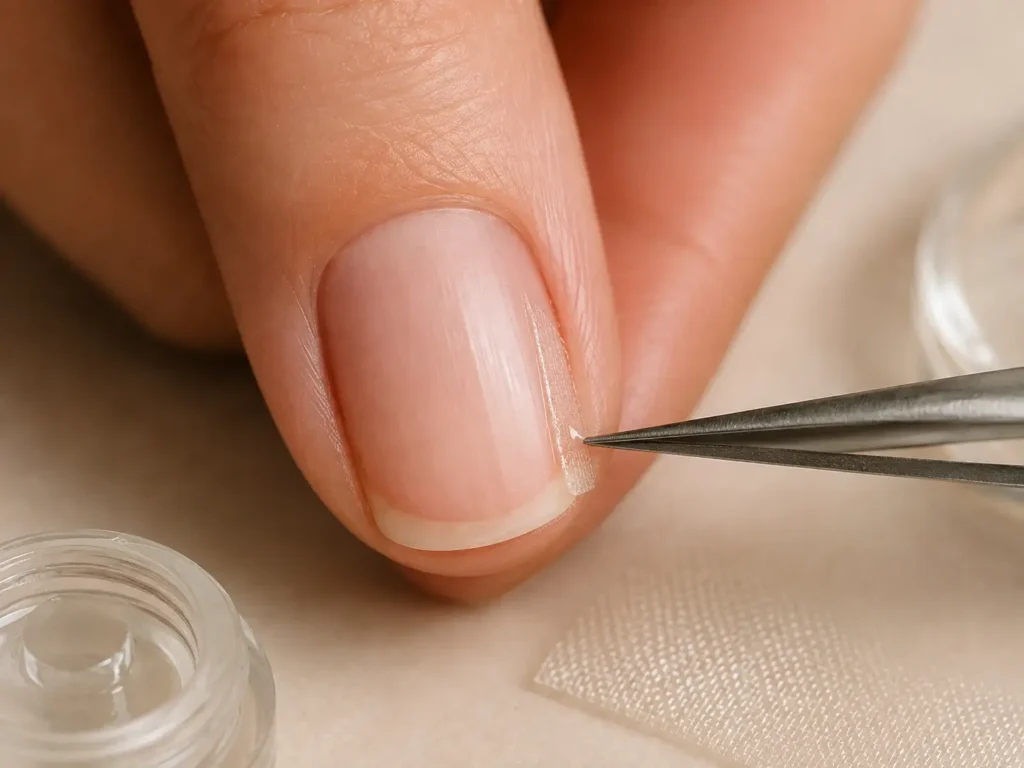
Cut a very small piece of nail-repair silk or fiberglass wrap.
It should be large enough to cover the crack without unnecessarily covering the entire nail.
A smaller, neat patch is usually easier to smooth than an oversized piece.
Step 4: Reinforce the Crack
Apply the nail-repair product according to the manufacturer’s instructions.
Carefully position the small patch over the cracked area using clean tweezers.
Keep the patch flat against the nail plate and avoid creating a bulky edge.
Step 5: Allow It to Set
Let the product cure or dry according to its specific instructions.
Don’t rush this step.
Once the repair has completely set, gently smooth any rough edges with a fine buffer.
Step 6: Protect the Finished Nail
A thin protective top coat can help create a smoother surface and reduce snagging.
Remember that this is a temporary cosmetic reinforcement, not a permanent repair of the damaged nail.
As the nail grows, the damaged section will gradually move toward the free edge.
What About the Tea Bag Nail Repair Trick?
The tea-bag method is a popular DIY nail-repair technique.
It uses a tiny piece of thin tea-bag paper as a reinforcement layer over a small crack in the nail plate.
Basic method
- Remove the tea from a clean, dry tea bag.
- Cut a tiny piece of the paper.
- Clean and dry the nail.
- Apply a suitable clear nail product according to its instructions.
- Position the paper over the crack.
- Allow it to dry or cure.
- Add another thin protective layer if appropriate.
- Gently smooth the surface once completely set.
This technique is best considered a temporary cosmetic patch, not a treatment for an injured nail bed.
If the crack reaches the skin or causes bleeding, don’t use this technique over the wound.
What If the Nail Broke Really Far Down?
This is where you should stop thinking about the problem as a normal nail-art repair.
If a nail breaks deeply enough to involve the attached skin, causes significant bleeding, becomes very painful, or is partly detached, don’t cover the injury with nail glue, gel, acrylic, or other cosmetic products.
Instead, focus on protecting the injured area and getting appropriate medical guidance.
Seek professional care if:
- The nail is badly torn or partially detached.
- Bleeding does not stop with gentle pressure.
- You have significant or increasing pain.
- The injury involves a large area under the nail.
- The finger cannot move normally.
- The area becomes increasingly red, swollen, warm, or develops drainage.
- You are unsure whether the nail bed has been injured.
A deep nail injury is not something to diagnose from a beauty blog.
Why Do Nails Crack on the Side?
Side-wall cracks can have several possible contributors.
1. Repeated Mechanical Stress
Using nails to open packages, scrape surfaces, pick at objects, or perform other tasks can place unnecessary pressure on the side walls.
Even small repeated stresses can eventually contribute to splitting.
2. Over-Filing the Side Walls
Aggressive filing can make the side edges thinner.
If you repeatedly file deeply into the corners, you may create a weaker point where the nail is more likely to split.
Better approach:
Use a fine file gently and avoid repeatedly sawing back and forth over the same area.
If you prefer a shorter shape that reduces the amount of free-edge leverage, see our guide to short almond nails.
3. Frequent Water Exposure
Repeated cycles of wetting and drying can make natural nails more susceptible to peeling and splitting.
This is especially relevant if your hands are frequently exposed to water during cleaning or household chores.
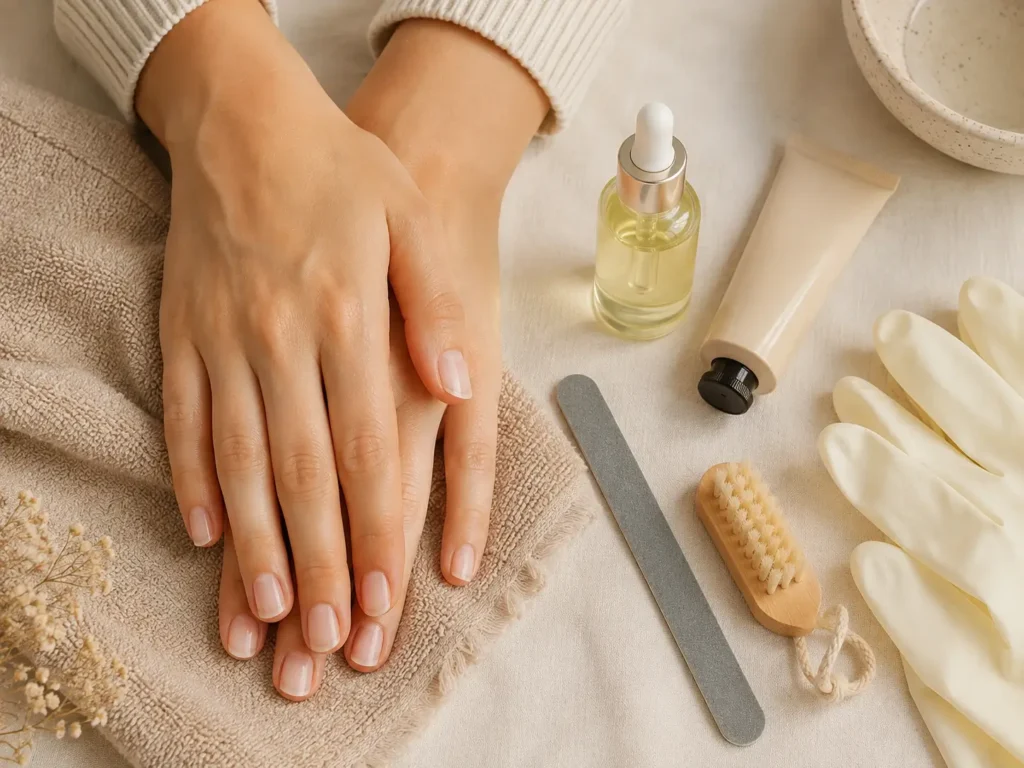
Wearing suitable gloves during wet work can help reduce unnecessary exposure.
4. Acetone and Harsh Nail-Product Exposure
Frequent exposure to strong solvents or aggressive nail-product removal can contribute to dryness and brittleness for some people.
If your nails are repeatedly becoming thin or fragile after manicures, consider giving them a break and focusing on gentle nail care.
5. Nail Enhancements and Removal
Gel, acrylic, extensions, and press-on nails aren’t automatically harmful, but aggressive application or removal can damage the natural nail surface.
Avoid peeling enhancements off.
If your natural nails repeatedly become weak or damaged after removal, consider changing your removal routine or taking a break from enhancements.
Can Vitamin Deficiency Cause Cracked Nails?
Nail changes can sometimes occur alongside nutritional deficiencies or other health conditions, but a side crack by itself is not enough to identify a vitamin deficiency.
That’s an important distinction.
You may see online claims that biotin, iron, calcium, zinc, or other nutrients are the answer to every brittle-nail problem. It is not a good idea to assume you have a deficiency and start taking supplements based only on a cracked nail.
If your nails are persistently brittle, repeatedly splitting, changing color or shape, or developing unusual patterns, talk with a qualified healthcare professional who can determine whether further evaluation is appropriate.
For a beauty-care routine, focus first on practical habits such as reducing mechanical stress, protecting your hands during wet work, and keeping the surrounding skin moisturized.
Does Vaseline Fix Cracked Nails?
No. Petroleum jelly cannot physically fuse a cracked nail back together.
However, an occlusive moisturizer such as petroleum jelly can help reduce dryness around the nails and cuticles.
You can apply a small amount around the cuticles and surrounding skin as part of a regular nail-care routine.
Think of it as moisture support-not crack repair.
If your nail is already split, you still need to protect the damaged area while it grows out.
How to Stop Nails From Cracking on the Sides
Once you’ve dealt with the immediate crack, prevention becomes more useful than repeatedly patching the same area.
Keep side walls smooth
Don’t allow sharp edges to remain after filing.
Avoid using nails as tools
Your nails are not designed to open cans, scrape labels, or pry objects apart.
Protect your hands during wet work
Consider wearing appropriate household gloves when washing dishes or cleaning for extended periods.
Moisturize regularly
Apply hand cream or cuticle oil to the nails and surrounding skin, particularly after washing your hands.
Be gentle during polish removal
Avoid aggressively scraping or peeling products from the natural nail.
Don’t over-file
Shape the nail gently rather than repeatedly thinning the side walls.
Give damaged nails a break
If your nails are repeatedly becoming thin after enhancements, consider reducing or pausing those services and focusing on gentle care.
How Long Does a Split Nail Take to Grow Out?
A damaged section doesn’t simply disappear overnight.
Instead, the crack generally moves toward the free edge as the nail grows.
The exact timeline varies depending on the individual nail, where the damage occurred, and how quickly the nail grows.
For that reason, there isn’t a reliable one-size-fits-all number of days for a side crack to completely grow out.
The practical goal is to protect the damaged section and avoid making the split larger while waiting for healthy nail growth.
When Should You Stop DIY Nail Repair?
A cosmetic nail repair is not appropriate for every crack.
It’s time to stop using manicure products and seek professional advice if:
- The crack is bleeding.
- The split reaches the attached skin.
- The nail is partly detached.
- Pain is significant or getting worse.
- There is substantial swelling.
- You notice increasing redness, warmth, or drainage.
- The injury happened after significant trauma.
- You aren’t sure whether the nail bed has been damaged.
- The same nail repeatedly cracks without an obvious mechanical reason.
When in doubt, protect the area rather than experimenting with stronger nail products.
Frequently Asked Questions
What should I do if my nail cracks on the side?
If the crack is limited to the nail plate, gently smooth any sharp edge and consider temporarily reinforcing the area with an appropriate nail-repair wrap or clear nail product. If the crack involves the skin, causes bleeding, or is very painful, treat it as an injury rather than a manicure problem.
Can a cracked nail heal itself?
The split portion of the nail plate does not simply fuse back together. Instead, the damaged section generally grows toward the free edge as new nail grows behind it.
Should I leave a cracked nail alone?
A tiny, stable crack may only need protection and monitoring. A jagged crack that catches on clothing or continues splitting should be gently protected. Never pull off a partially attached nail section.
Does Vaseline fix cracked nails?
No. Vaseline cannot fuse a physical crack together, but it can help moisturize the surrounding nail and cuticle area and may be useful as part of a regular nail-care routine.
Can I use nail glue on a cracked nail?
For a cosmetic nail-plate crack, some nail-repair systems use adhesive products. However, nail glue should not be applied to an open wound, bleeding skin, or an injured nail bed. Always follow the product’s instructions.
What vitamin deficiency causes cracked nails?
There isn’t one vitamin deficiency that can be diagnosed from a side nail crack alone. Persistent or unusual nail changes may have many possible causes. If you’re concerned about nutritional deficiency or ongoing nail changes, speak with a qualified healthcare professional rather than self-diagnosing.
How do I fix a small side crack without nail glue?
A small crack that stays entirely within the nail plate can sometimes be temporarily reinforced with a nail-repair silk or fiberglass wrap and a suitable clear nail product. The tea-bag patch method is another commonly used cosmetic technique.
Will a split nail grow out?
Usually, the damaged section can gradually move toward the free edge as the nail grows. It can then be trimmed away once it has grown beyond the attached part of the nail.
Why do my nails keep cracking on the sides?
Repeated side cracking can be associated with mechanical stress, over-filing, repeated wet/dry exposure, harsh product exposure, or damage from nail enhancements. Persistent unexplained nail changes should be discussed with a healthcare professional.
What if my nail breaks deep into the nail bed?
If the nail breaks deeply, bleeds, becomes very painful, or is partially detached, don’t treat it as a cosmetic repair. Protect the area and seek appropriate medical advice, especially if the injury is significant.
Final Takeaway
A cracked nail on the side can be frustrating, but the safest approach depends on how deep the crack actually is.
For a small crack confined to the nail plate, gentle filing and temporary reinforcement can help protect the damaged section while it grows out.
For a crack involving the skin, bleeding, significant pain, or partial nail detachment, skip the DIY manicure repair and treat it as an injury that may need professional attention.
And if your nails repeatedly split despite gentle care, don’t assume you simply need a stronger nail product or a vitamin supplement. Persistent nail changes are worth discussing with a qualified healthcare professional.
This article is intended for general beauty and nail-care information and is not a substitute for professional medical diagnosis or treatment.