How to Clean Gold-Plated Jewelry (and Keep It From Tarnishing)
Emma Grace
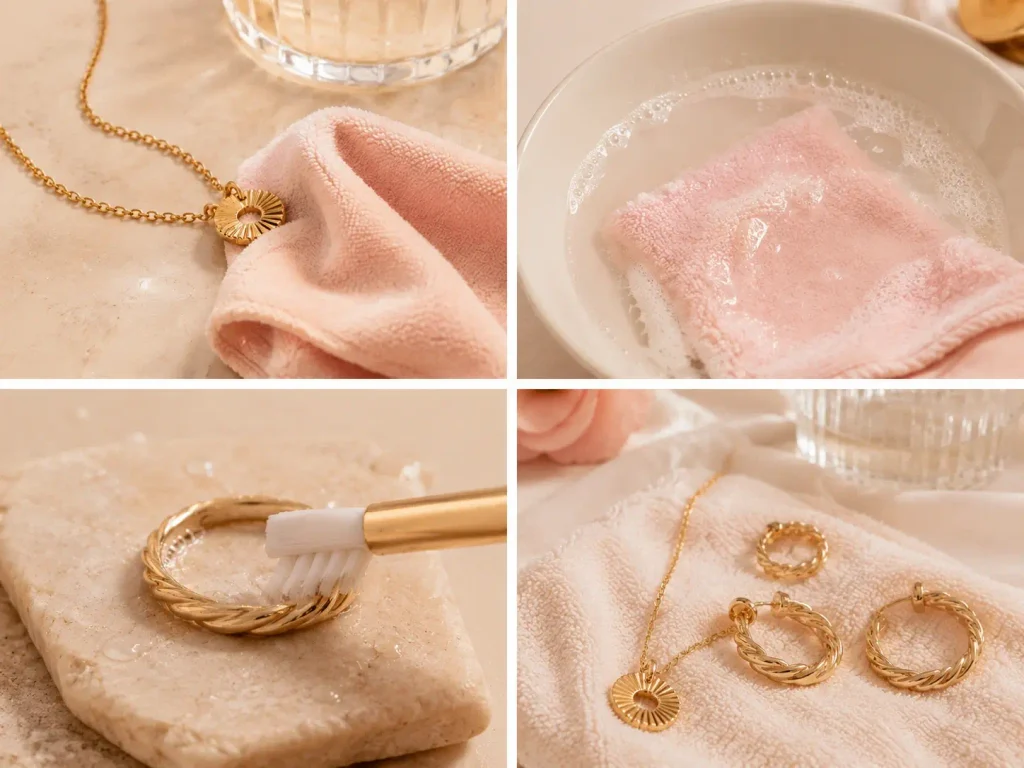
Quick answer: To clean gold-plated jewelry safely, start with a soft microfiber cloth dampened with lukewarm water and a small amount of mild dish soap. Gently wipe the piece, remove any soap residue, and dry it completely. Avoid abrasive cleaners, toothpaste, baking soda, harsh metal polish, and aggressive scrubbing because they can wear away the thin gold layer. To slow tarnishing and plating wear, keep gold-plated jewelry away from prolonged water exposure, sweat, perfume, lotion, and chlorine, and store it somewhere dry and protected.
Gold-plated jewelry gives you the look of gold without the price of solid gold, but that thin layer of gold needs a little extra care.
Everyday exposure to water, sweat, perfume, lotion, friction, humidity, and harsh cleaning products can gradually dull the finish or wear through the plating. And once the gold layer has actually worn away, cleaning alone can’t put it back.
The good news is that caring for gold-plated jewelry doesn’t have to be complicated.
This guide explains how to clean gold-plated jewelry at home, what cleaning methods to avoid, how to prevent tarnishing, how to store your pieces, and what you can realistically do when the plating has already started to wear.
Gold-plated jewelry consists of a base metal covered with a layer of gold. The base metal can vary depending on the piece and may include materials such as brass, copper, silver, or stainless steel.
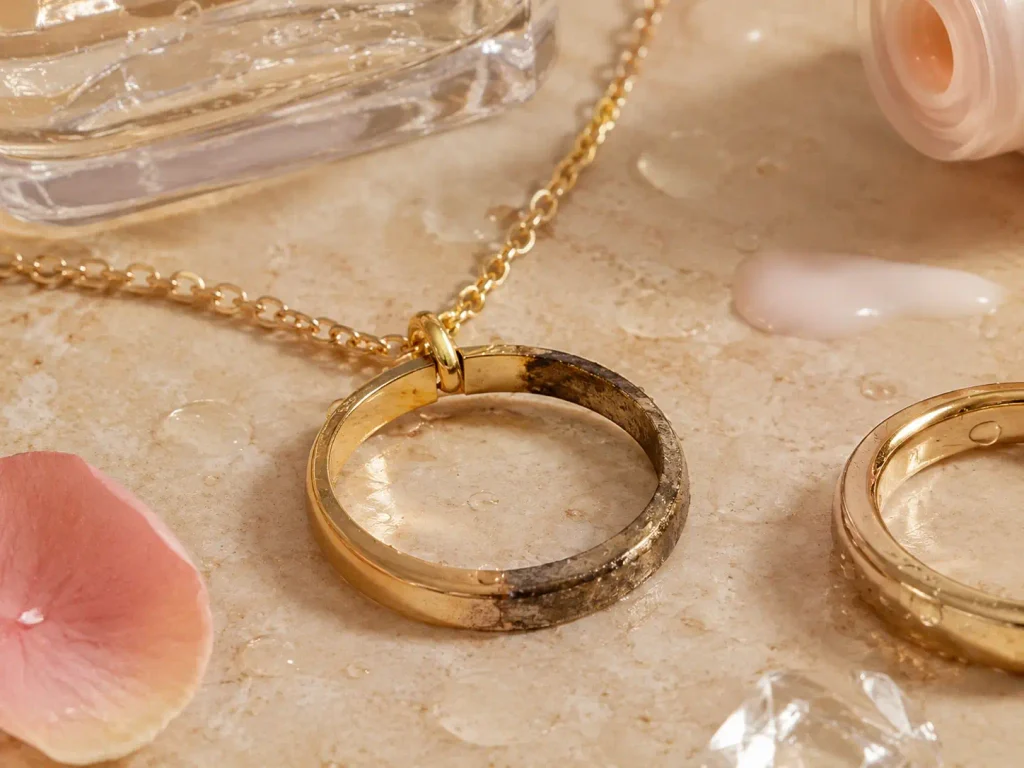
The gold surface itself is relatively resistant to tarnishing, but the plating is much thinner than a solid-gold piece. With repeated wear, the surface can gradually become scratched or worn, exposing the metal underneath.
Several everyday factors can speed up this process:
Water and prolonged moisture
Sweat and body oils
Perfume and body sprays
Lotion, sunscreen, and other skincare products
Chlorine from pools and hot tubs
Household chemicals and cleaning products
Friction from clothing or other jewelry
Humid storage conditions
Abrasive cleaning or polishing
This is why one gold-plated necklace might still look beautiful after years while another starts showing wear much sooner. Plating thickness, construction, frequency of wear, exposure to moisture and chemicals, and care habits all make a difference.
Tarnish vs. Worn Plating: What’s the Difference?
This distinction is important.
If your jewelry simply has surface dirt, oils, or mild discoloration, gentle cleaning may restore some of its shine.
But if you can see a different-colored metal underneath the gold, the plating may have physically worn away. Cleaning cannot recreate missing gold.
Important: Don’t keep scrubbing a worn area in an attempt to make it gold again. More friction can remove even more of the remaining plating.
What You Need to Clean Gold-Plated Jewelry
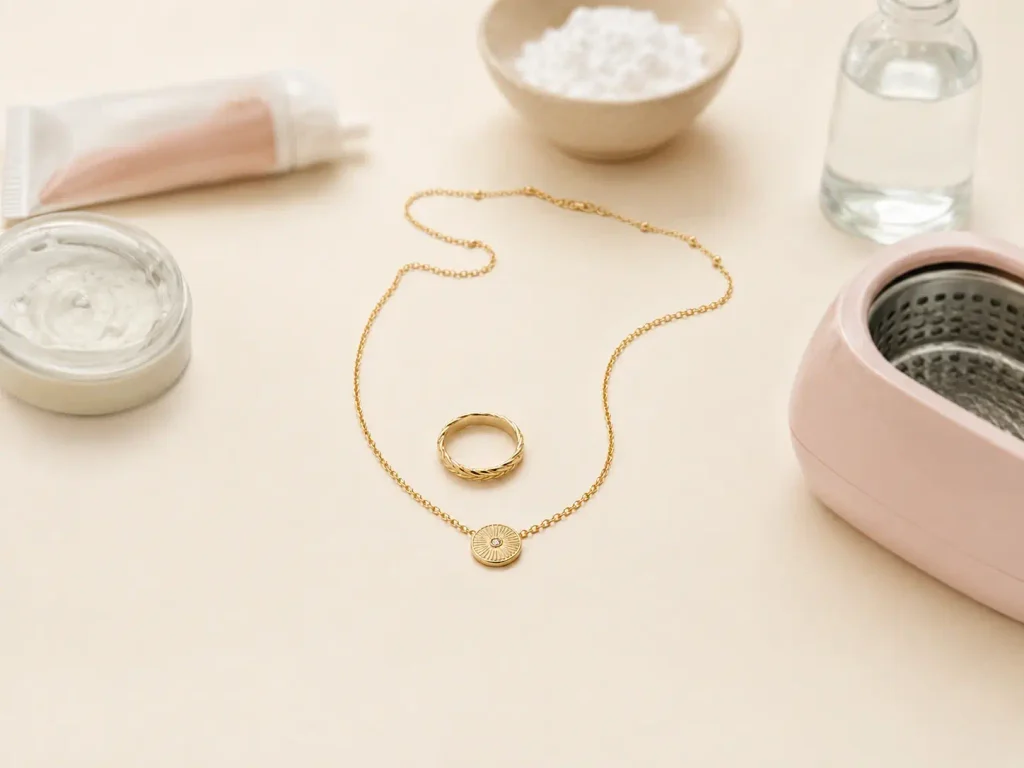
You don’t need an expensive jewelry-cleaning kit for routine care.
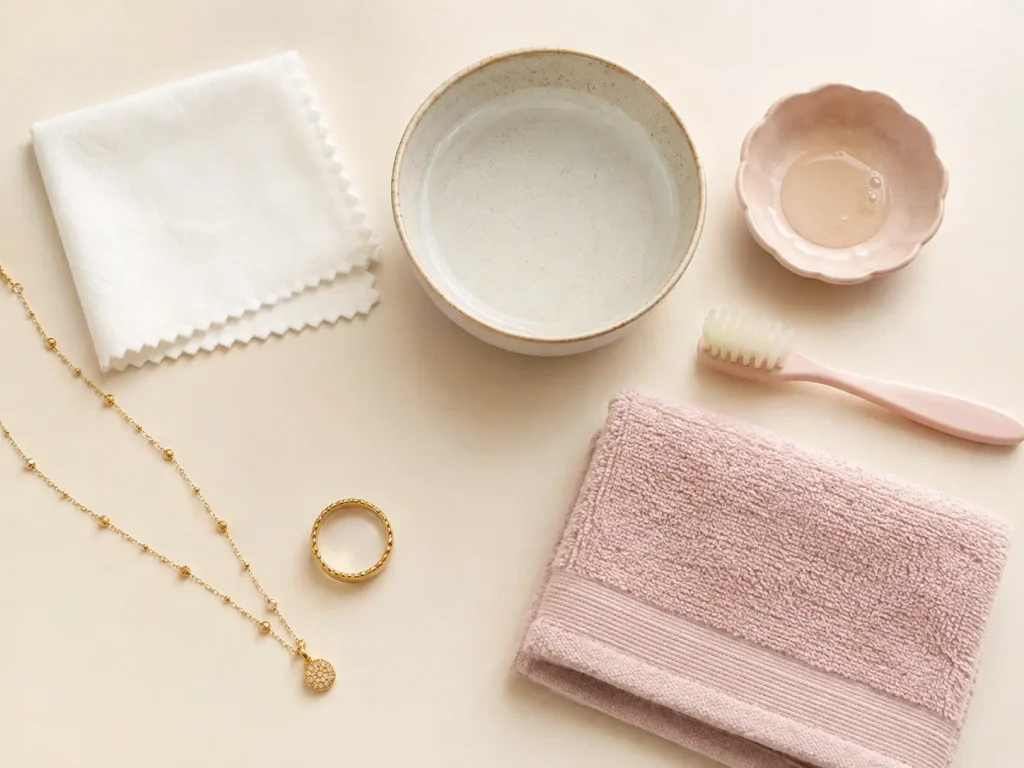
For most gold-plated pieces, gather:
A small bowl
Lukewarm water
A small amount of mild dish soap
A soft, lint-free or microfiber cloth
A very soft brush for detailed areas, if necessary
A clean, dry towel
Avoid strong metal polishes unless the manufacturer specifically states that they are safe for your particular plated piece.
Before You Clean
Take a quick look at the piece before putting it in water.
If it contains pearls, glued stones, enamel, leather, porous materials, or other water-sensitive components, don’t assume the general method below is appropriate. Avoid soaking and check the manufacturer’s care instructions when available.
When you’re unsure, the gentlest option is usually a lightly damp cloth rather than immersion.
Cleaning helps when your jewelry is already dirty or dull. Prevention is what helps reduce how often you need to clean it.
1. Put Jewelry on Last and Take It Off First
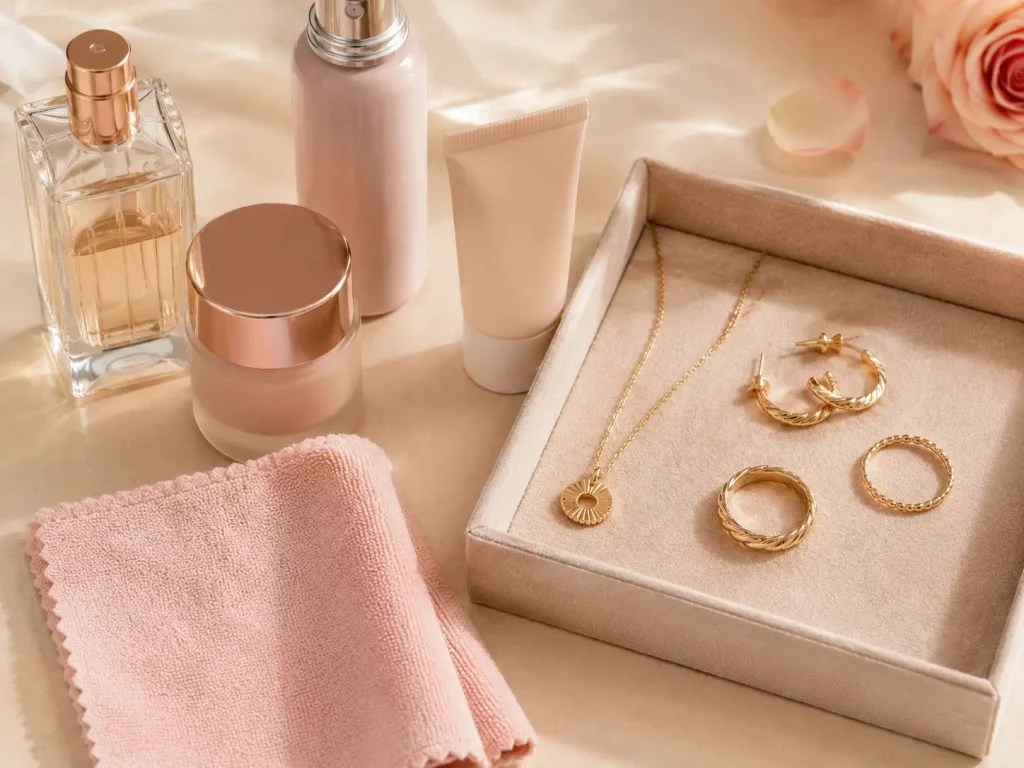
Apply perfume, lotion, sunscreen, hairspray, and other beauty products before putting on your jewelry.
Give products time to absorb before wearing your pieces.
At the end of the day, remove your jewelry before washing your face, showering, or starting your nighttime skincare routine.
2. Keep It Away From Prolonged Water Exposure
Can gold-plated jewelry get wet?
Brief accidental contact with water doesn’t automatically ruin a piece, but repeated or prolonged exposure can accelerate wear.
It’s best to remove gold-plated jewelry before:
Showering
Swimming
Using a hot tub
Washing dishes
Exercising heavily
Doing activities that leave the piece wet for an extended period
If your jewelry does get wet, dry it as soon as possible.
3. Avoid Chlorine
Pools and hot tubs deserve extra caution.
Chlorinated water can be particularly harsh on jewelry finishes, so remove gold-plated pieces before swimming or using a hot tub.
4. Wipe It After Wearing
A quick wipe with a soft microfiber cloth can remove sweat, body oils, and product residue before you store the jewelry.
You don’t need to polish it aggressively.
Think of it as a simple 10-second maintenance habit.
5. Reduce Friction
Don’t pile necklaces, rings, and bracelets together where they constantly rub against each other.
Repeated friction can contribute to scratches and plating wear.
This is especially important for delicate chains and pieces you wear frequently.
How to Store Gold-Plated Jewelry
Good storage can make a noticeable difference because jewelry continues to be exposed to air, humidity, and friction even when you’re not wearing it.
Follow these simple habits:
Store jewelry in a dry location.
Keep it away from bathroom humidity.
Make sure each piece is completely dry before storage.
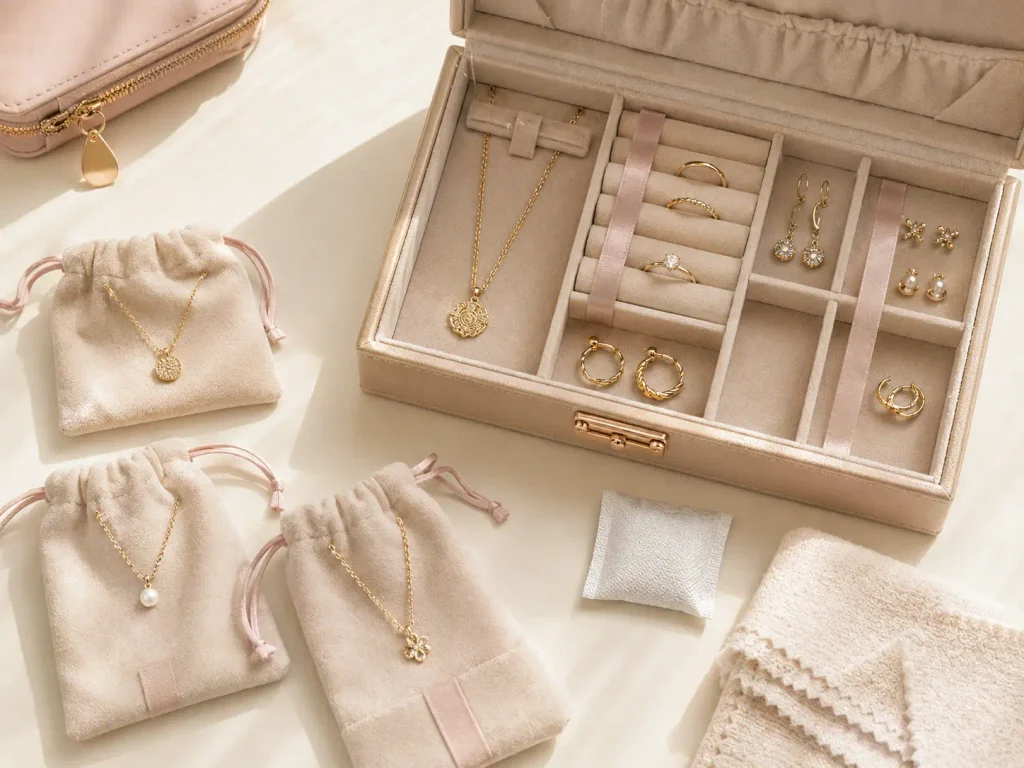
Separate pieces when possible.
Keep necklaces from rubbing against other metal pieces.
Avoid leaving gold-plated jewelry exposed on an open tray for long periods in a humid environment.
For additional protection, you can use an anti-tarnish jewelry pouch or anti-tarnish strips designed for jewelry storage.
Anti-tarnish products and silica gel serve different purposes. Anti-tarnish materials are designed to help reduce exposure to tarnish-causing compounds, while silica gel helps control moisture.
They can be used together when appropriate, but one isn’t a direct replacement for the other.
There isn’t one guaranteed lifespan for gold-plated jewelry.
A piece with very thin plating that is worn every day, exposed to water, and stored improperly may show visible wear relatively quickly.
A better-plated piece that is worn occasionally and cared for carefully can remain attractive for much longer.
The main factors include:
Plating thickness
Base-metal and construction quality
Frequency of wear
Exposure to water and chemicals
Sweat and skincare products
Friction
Storage conditions
Cleaning habits
If you’re buying gold-plated jewelry, look for clear information about the plating and construction rather than assuming that every gold-plated piece will last the same amount of time.
Can Tarnished Gold-Plated Jewelry Be Restored?
Sometimes-but it depends on what you’re seeing.
If the jewelry has accumulated surface oils, dirt, or mild discoloration, gentle cleaning may restore some of its original shine.
But if the gold layer has physically worn away and the base metal is visible, cleaning cannot replace it.
At that point, professional replating may be possible, although whether it’s worthwhile depends on the jewelry’s value, construction, and sentimental importance.
Don’t scrub harder when plating is missing. More aggressive cleaning won’t restore the gold and may make the worn area larger.
Can Gold-Plated Jewelry Turn Your Skin Green?
It can.
Some gold-plated pieces use copper-containing or other reactive base metals underneath the gold layer. When that exposed or contacted metal interacts with moisture, sweat, and skin oils, it can sometimes leave temporary green discoloration.
A green mark doesn’t automatically mean the jewelry is fake, and the issue isn’t necessarily caused by the gold itself.
If this happens frequently, the type of base metal and the condition of the plating are worth checking.
For a deeper explanation of why rings turn fingers green, which metals are less likely to cause it, and ways to prevent it, see our dedicated guide: Why Do Rings Turn Your Finger Green?
Frequently Asked Questions
How Do You Clean Gold-Plated Jewelry?
Use lukewarm water, a small amount of mild dish soap, and a soft microfiber cloth. Gently wipe the jewelry, remove soap residue without prolonged soaking, and dry it completely. Avoid abrasive cleaners and aggressive polishing.
How Do You Keep Gold-Plated Jewelry From Tarnishing?
Limit prolonged exposure to water, sweat, perfume, lotion, chlorine, and household chemicals. Wipe jewelry after wearing it, reduce friction, and store it completely dry in a protected, low-humidity environment.
Does Gold-Plated Jewelry Tarnish in Water?
Repeated or prolonged water exposure can accelerate wear and discoloration, particularly when combined with soap, chlorine, sweat, or other chemicals. Brief accidental contact doesn’t necessarily cause immediate damage, but removing jewelry before showering or swimming is the safer approach.
Can You Shower With Gold-Plated Jewelry?
It’s best to remove it before showering. Water, soap, shampoo, heat, and repeated moisture exposure can gradually shorten the life of the plating.
Can You Polish Gold-Plated Jewelry?
Avoid aggressive polishing because the gold layer is thin. For routine care, use a soft microfiber cloth and gentle wiping rather than abrasive polishing products.
How Should You Store Gold-Plated Jewelry?
Store it clean and completely dry in a dry location away from bathroom humidity. Separate pieces when possible to reduce friction, and consider an anti-tarnish pouch or storage system for additional protection.
Does Clear Nail Polish Keep Jewelry From Tarnishing?
Clear nail polish is sometimes used as a temporary barrier on areas of inexpensive jewelry that directly contact the skin, but it isn’t a universal jewelry-care solution. It can chip or peel and may not be appropriate for every finish or component.
For a more durable approach, use a jewelry protectant only when it is specifically compatible with the material and finish of the piece.
Is Gold-Plated Jewelry Worth Buying?
It can be a good choice if you want the appearance of gold at a lower price and understand that it requires more care than solid gold.
For jewelry you expect to wear continuously for many years, gold-filled or solid-gold options generally offer greater durability, although they also cost more.
Related Reading
If you enjoy pairing gold-toned jewelry with your manicure, you may also like our guide to Velvet Cat-Eye Nails for a polished look that works especially well with gold rings and stacked jewelry.
More jewelry-care guides are coming soon:
Jewelry That Doesn’t Tarnish: Best Affordable Picks
Why Do Rings Turn Your Finger Green? (And How to Stop It)
How to Layer Necklaces Without Tangling
Final Gold-Plated Jewelry Care Checklist
Before putting your jewelry away, remember:
Wear → Remove → Wipe → Dry → Store
Put jewelry on after perfume and skincare.
Remove it before showering, swimming, and workouts.
Wipe away sweat and oils after wearing.
Make sure it’s completely dry.
Store pieces separately in a dry, protected place.
A few simple habits can help your gold-plated jewelry maintain its appearance for much longer-and help you avoid the cleaning mistakes that can wear away the plating faster.
This post contains affiliate links. As an Amazon Associate, Simply Styled Beauties earns from qualifying purchases, at no extra cost to you.
Hi, I'm Emma Grace - I've tried more press-on brands, base coats, and nail hacks than probably necessary, all so I can tell you honestly what's actually worth it. Everything on Simply Styled Beauties comes from things I've tested myself, not copied from a press release.